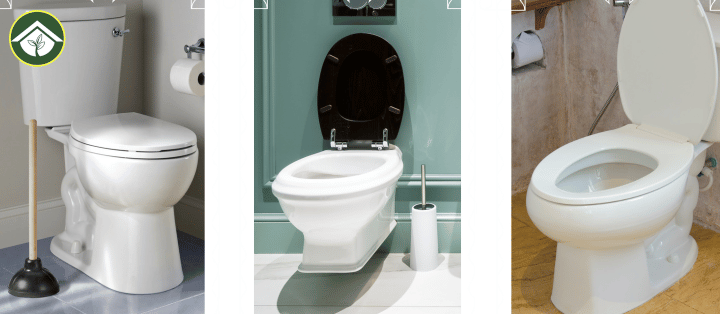
A toilet seat is one of the most used fixtures in any home — yet most people replace it without giving it much thought. The truth is, choosing the right one makes a real difference in comfort, hygiene, and how your bathroom looks and feels every day. From shape and size to material and special features, there is far more variety than most people expect. This guide walks you through everything — the different styles of toilet seats, how sizes work, what materials last longest, and which features are actually worth it — so you can make a confident, informed decision.
Toilet Seat Types by Shape — The Most Important Starting Point:
Shape is the first thing to get right. If the seat doesn’t match your toilet bowl, nothing else matters. Most toilet bowls fall into one of four shapes, and each has a corresponding seat designed to fit it.
Round Toilet Seats:
Round seats are the classic, traditional option. They are compact — typically around 16 to 16.5 inches from the mounting bolts to the front edge — making them a practical fit for smaller bathrooms. They cost slightly less than elongated options and are widely available. The trade-off is that they offer a bit less seating space, which some adults find less comfortable for extended use.
Elongated Toilet Seats:
Elongated seats have an oval shape and measure around 18 to 18.5 inches from bolt to front edge — roughly two inches longer than a round seat. That extra length adds meaningful comfort, especially for taller adults. They are the go-to choice for modern bathrooms and are often considered more ergonomic. The downside is that they require slightly more space, so a very compact bathroom may not accommodate them comfortably.
Round vs Elongated Toilet Seat — Which Is Better?
This comes down to your bathroom size and personal comfort. If space is tight, a round seat is the practical pick. If comfort is the priority and you have the room, elongated wins easily. Neither is universally better — they simply serve different needs.
D-Shaped Toilet Seats:
A D-shaped toilet seat sits somewhere between elongated and square in appearance. The front edge is flat rather than curved, giving the seat a clean, geometric look. These are popular in modern and minimalist bathroom designs and typically measure around 17 to 17.5 inches in length. They pair well with contemporary toilet designs and offer a sleek visual upgrade over standard round or oval options.
Square Toilet Seats:
Square seats are a bold design choice found in high-end and designer bathrooms. They are built specifically for square-shaped toilet bowls and offer a sharp, architectural look. Because square toilets are less common in standard homes, always verify compatibility carefully before purchasing. These seats average 16 to 18 inches and have a distinctive flat, clean-lined appearance.
Toilet Seat Materials — Plastic vs Wood and Everything In Between:
The material affects durability, feel, warmth, weight, and overall appearance. Understanding the options helps you pick something that holds up well in your home.
Plastic Toilet Seats:
Plastic is by far the most common toilet seat material. It is lightweight, affordable, easy to clean, and resistant to stains. Two main types exist — polypropylene (PP), which is durable and budget-friendly, and urea-formaldehyde (UF), which is heavier, more rigid, and closer in feel to wood. Plastic seats come in a wider range of colors than wooden options and are compatible with virtually all hinge types.
Wood vs Plastic Toilet Seat:
Wood feels warmer and heavier, which many people prefer. Plastic is easier to maintain and more resistant to bathroom humidity over time. For most households, plastic makes the most practical choice. Wood, however, adds visual warmth and a premium feel to traditional or rustic bathroom styles — and it doesn’t get as cold as plastic in winter.
Enameled Wood Toilet Seats:
Enameled wood seats combine the sturdy, substantial feel of wood with a glossy, protective finish that resists staining, chipping, and wear. They look refined and hold up better against moisture than natural wood. The enamel coating gives them a slightly more formal appearance, making them a popular choice in traditional and period-style bathrooms.
Resin Toilet Seats:
Resin — sometimes called polyresin — seats are durable, scratch-resistant, and unique. They can be made in solid colors or completely transparent, with decorative items embedded inside the seat itself. Resin seats are a popular choice for novelty designs and can feature anything from shells and stones to colored patterns. Beyond the novelty factor, they are genuinely durable and easy to maintain.
Is Wood or Plastic Toilet Seat Better?
There is no one-size-fits-all answer. Plastic is more practical — lighter, cheaper, and easier to clean. Wood feels more premium, adds visual warmth, and stays warmer to the touch. If you want low-maintenance and long-lasting, go plastic. If you want character and comfort, go wood. Enameled wood gives you a middle ground — the feel of wood with better durability.
Toilet Seat Sizes — Getting the Right Fit
Standard Toilet Seat Size and Dimensions:
Standard toilet seat dimensions fall into two main categories. Round seats measure approximately 16 to 16.5 inches from the hinge holes to the front of the seat and around 14 inches wide. Elongated seats measure approximately 18 to 18.5 inches in length and the same 14 inches wide. These measurements are relatively consistent across most major manufacturers.
Are Toilet Seats Universal?
Not exactly. While the bolt hole spacing on most toilets is standard at 5.5 inches apart, the shape and size of the bowl determine which seat fits. A round seat will not sit properly on an elongated bowl and vice versa. Always measure your existing toilet or check the manufacturer specifications before purchasing a replacement seat.
How to Measure a Toilet Seat:
Measure from the center of the bolt holes at the back of the bowl to the front outer edge of the bowl. A measurement of around 16 to 17 inches indicates a round toilet. A measurement of 18 inches or more indicates an elongated toilet. Also measure the width at the widest point — most standard toilets measure about 14 inches wide.
Toilet Seat Features — What the Options Actually Do?
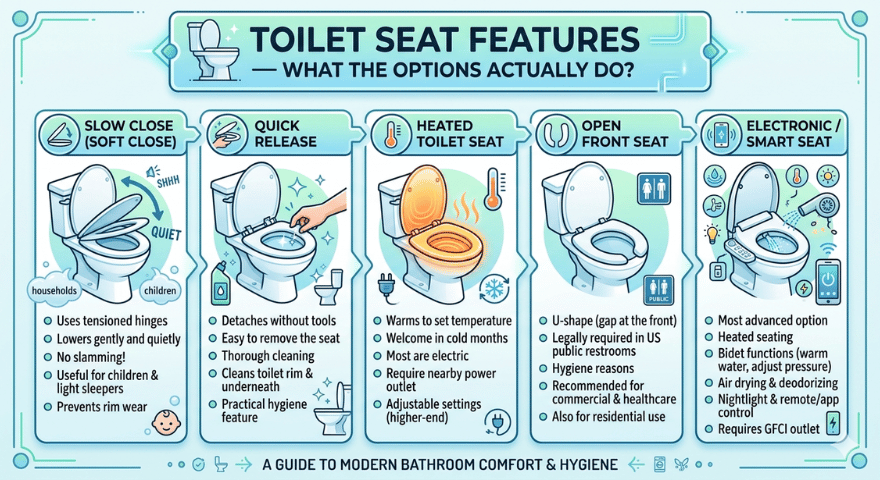
Modern toilet seats offer a range of features that go well beyond basic function. Some are genuinely useful; others are premium upgrades worth knowing about.
Slow Close Toilet Seats:
A slow close — also called soft close — toilet seat uses tensioned hinges to lower the seat and lid gently and quietly. There is no slamming. This is especially useful in households with children and light sleepers, and it also prevents wear on the toilet bowl rim over time.
Quick Release Toilet Seats:
Quick release seats detach from the hinge system without any tools, making it easy to remove the entire seat for thorough cleaning of the toilet rim and the area underneath. This is a practical hygiene feature that many people overlook when shopping.
Heated Toilet Seats:
A heated seat warms to a set temperature and is particularly welcome in cold months. Most heated options are electric and require a nearby power outlet. Some higher-end versions allow adjustable heat settings and can be combined with other smart features.
Open Front Toilet Seats:
Open front seats have a gap at the front of the seat, creating a U-shape rather than a full oval or round. These are legally required in public restrooms across the United States for hygiene reasons. They are also available for residential use and are recommended for commercial and healthcare settings.
Electronic Toilet Seats:
Electronic or smart seats are the most advanced option available. They can include heated seating, built-in bidet functions with warm water and adjustable pressure, air drying, deodorizing, nightlight features, and remote or app control. These seats require a nearby GFCI electrical outlet. They are a significant investment but offer a notably elevated bathroom experience.
Frequently Asked Questions About Toilet Seats:
What are the main types of toilet seats?
Toilet seats are categorized by shape (round, elongated, D-shaped, square), material (plastic, wood, enameled wood, resin), and feature set (standard, slow close, quick release, heated, electronic/bidet). Most households use either a round or elongated plastic seat with slow-close hinges.
How do I know if a toilet seat will fit my toilet?
Measure from the center of the bolt holes to the front edge of the bowl. Under 17 inches means a round seat. 18 inches or more means elongated. Also check the width — most standard bowls are about 14 inches wide. The bolt spacing on most toilets is 5.5 inches and is consistent across brands.
Are all toilet seats the same size?
No. Toilet seats come in two main sizes — round and elongated — and these are not interchangeable. While the bolt hole spacing is fairly standardized, the overall length and shape of the seat must match the toilet bowl.
What is the difference between a round and elongated toilet seat?
Round seats are approximately 16 to 16.5 inches long and more compact. Elongated seats are approximately 18 to 18.5 inches long and provide more seating area. Elongated seats are generally considered more comfortable but require slightly more space.
Is a wood or plastic toilet seat better?
Plastic seats are lighter, lower maintenance, and more affordable. Wood seats feel warmer, heavier, and more premium. Enameled wood offers a durable middle ground. For most homes, plastic is the practical choice. Wood suits traditional bathroom aesthetics well.
What is a slow close toilet seat?
A slow close toilet seat uses built-in tensioned hinges to lower the seat and lid gently instead of allowing them to slam shut. This reduces noise, prevents damage to the bowl, and is safer for households with young children.
What is a quick release toilet seat?
A quick release seat clicks off its hinges without tools, allowing the entire seat to be removed in seconds for easy and thorough cleaning underneath and around the toilet rim.
What is an open front toilet seat?
An open front toilet seat has a gap cut from the front, forming a U-shape. This design is required by plumbing code in public restrooms across the United States and is also used in many commercial and healthcare settings for hygiene reasons.
Do heated toilet seats require electricity?
Yes. Most heated toilet seats are electric and require a grounded GFCI outlet within reach of the toilet. Some basic heated options use passive heat retention material that requires no electricity, though these are far less effective.
What is a D-shaped toilet seat?
A D-shaped toilet seat has a flat front edge rather than a curved one, giving it a modern geometric appearance. It is designed for D-shaped toilet bowls, which are common in contemporary bathroom designs and measures around 17 to 17.5 inches in length.
What material lasts the longest in a toilet seat?
Enameled wood and high-quality urea-formaldehyde (UF) plastic both offer excellent durability. UF plastic resists scratches and staining well. Enameled wood is chip and wear-resistant but can be damaged by harsh chemical cleaners over time. Stainless steel seats last the longest of all but are typically reserved for commercial use.
Can I put an elongated seat on a round toilet?
No. An elongated seat is longer than a round toilet bowl and will overhang the front, creating an unstable and uncomfortable fit. Always match the seat shape to the bowl shape.
What is the standard toilet seat height?
Standard toilet seat height — from the floor to the top of the seat — is typically around 15 to 17 inches. ADA-compliant or comfort height toilets with their seats sit between 17 and 19 inches from the floor, which is easier for most adults to sit down and stand up from.
How often should a toilet seat be replaced?
Most toilet seats last between 5 and 10 years with regular use. Signs that a replacement is needed include cracks, staining that cannot be cleaned, loose or broken hinges, and visible wear on the surface. Replacing just the seat is straightforward and does not require replacing the entire toilet.
Are resin toilet seats durable?
Yes. Resin seats are scratch-resistant and hold up well to everyday use. They are particularly popular for their decorative possibilities — transparent resin seats can contain embedded objects or designs. Quality resin seats perform comparably to standard plastic in terms of longevity.


Leave a Reply