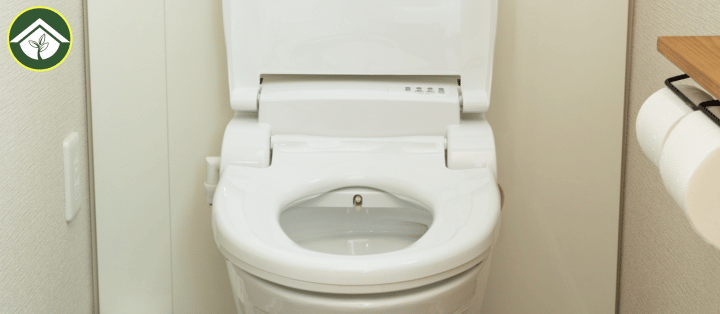
That jarring crash in the middle of the night — the toilet seat slamming down like a thunderclap — is one of those small household annoyances that has a surprisingly simple fix. Slow close toilet seats, also widely known as soft close toilet seats or quiet close toilet seats, have quietly revolutionised the bathroom experience for millions of homeowners. Engineered with precision hydraulic dampers built directly into the hinge mechanism, these seats lower themselves gently and silently without any effort from the user. Whether you are renovating a family bathroom, upgrading a rental property, or simply replacing a worn-out seat, understanding how slow close technology works — and knowing which type suits your toilet — will save you money, frustration, and a whole lot of noise.
What Are Slow Close Toilet Seats and How Do They Work?
A slow close toilet seat (also called a soft close toilet seat or soft closing toilet seat) is designed to descend gently and silently when pushed. Rather than relying on gravity alone — which causes the seat to fall fast and slam against the porcelain bowl — a slow close seat uses a built-in damping mechanism to control the entire closing motion from start to finish.
The Science Behind the Soft Close Hinge:
At the heart of every slow close toilet seat is a rotary damper housed inside the hinge assembly. According to engineering research by TOK Inc., a rotary damper works by using viscous resistance — a specially formulated oil sealed inside the damper housing — to slow the rotation of the hinge shaft. When the seat is lifted, potential energy is stored. As it is lowered, the damper converts that energy into a smooth, controlled descent, slowing the seat to just a few centimetres per second before it rests silently on the bowl rim.
This technology, first introduced in Japan in the early 1990s, requires no electricity and no batteries. It is a fully mechanical system engineered to withstand tens of thousands of cycles across years of daily use. The American National Standards Institute (ANSI) Z124.5 standard for toilet seat durability requires mechanisms to endure over 30,000 closing cycles — the equivalent of more than eight years of typical household use.
Key Benefits of Upgrading to a Soft Close Toilet Seat:
Noise Elimination:
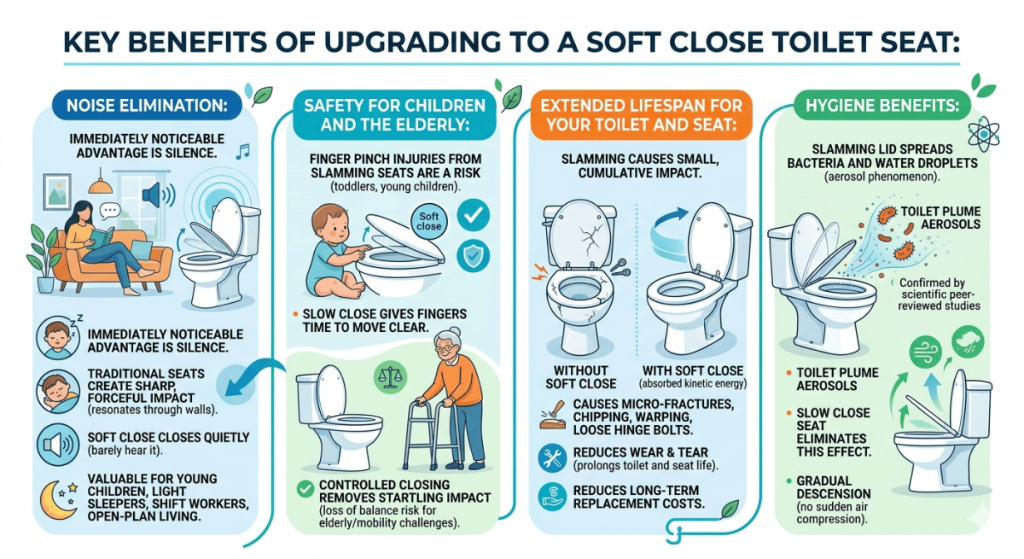
The most immediately noticeable advantage is silence. Traditional toilet seats create a sharp, forceful impact every time they fall — a sound that resonates through walls and floors. A soft close toilet seat, by contrast, closes so quietly that you can barely hear it. This is particularly valuable in homes with young children, light sleepers, shift workers, or open-plan living areas where bathroom noise travels easily.
Safety for Children and the Elderly:
Finger pinch injuries from slamming toilet seats are a genuine risk, particularly for toddlers and young children who tend to touch, play with, or accidentally drop lids. Slow close toilet seats give fingers enough time to move clear before the seat completes its descent. For elderly users or those with mobility challenges, the controlled closing motion also removes the risk of a sudden, startling impact that could cause a loss of balance.
Extended Lifespan for Your Toilet and Seat:
Every time a standard seat slams down, it creates a small but cumulative impact on the porcelain bowl and the seat material itself. Over time, this causes micro-fractures, chipping, warping, and loosening of the hinge bolts. By absorbing the kinetic energy of descent, a soft close seat significantly reduces this wear and tear — protecting both the seat and the toilet bowl, and reducing long-term replacement costs.
Hygiene Benefits:
When a toilet lid slams down rapidly, the sudden air displacement can spread bacteria and fine water droplets from the bowl into the surrounding air — a phenomenon confirmed in numerous peer-reviewed studies on toilet plume aerosols. A slow close seat eliminates this effect entirely by descending gradually, with no sudden air compression.
Slow Close Toilet Seat Types — Choosing the Right One for Your Bathroom:
Soft Close Elongated Toilet Seat:
Elongated toilets have an oval-shaped bowl measuring approximately 18.5 inches from the centre of the mounting holes to the front rim. An elongated toilet seat is generally considered more comfortable for adults due to its greater surface area. Because elongated lids are heavier than round counterparts, the damping mechanism in a soft close elongated toilet seat is typically engineered to handle the extra weight while maintaining the same controlled, silent descent. These are the most popular choice for modern master bathrooms and en-suites.
Soft Close Round Toilet Seat:
Round toilet bowls measure approximately 16.5 inches in length and are more common in compact bathrooms, cloakrooms, and older homes. A soft close round toilet seat offers all the same slow close benefits in a smaller footprint. They are generally slightly less expensive than elongated versions and are often recommended for children’s bathrooms where a smaller bowl size is more practical.
Slow Close Toilet Seat for Kids:
Several manufacturers now produce family-specific slow close toilet seats with a built-in toddler potty seat integrated directly into the lid. When not in use, the smaller child seat clips magnetically into the underside of the cover, staying out of the way for adults. When potty training time arrives, children can flip it down independently, building confidence and reducing accidents. All components — adult seat, child seat, and lid — operate on the same slow close mechanism, protecting small fingers at every stage.
Easy-Clean Soft Close Toilet Seat with Quick Release:
An easy-clean soft close toilet seat with quick release is arguably the most practical everyday upgrade available. The quick release hinge mechanism allows the entire seat to be unclipped from the toilet bowl in seconds — with no tools required — for thorough cleaning of the bowl rim and the often-neglected gap between the hinge posts. This feature makes a significant difference to bathroom hygiene over time. Research cited in toilet seat user surveys has found that 85% of homeowners with quick release hinges report cleaning their toilet more frequently and more effectively as a direct result of easier access.
Toilet Seat Materials — What to Look for in a Slow Close Seat:
Plastic (Polypropylene):
The most widely available material for slow close toilet seats. High-quality polypropylene is non-porous, stain-resistant, moisture-resistant, and easy to wipe clean. Look for seats made from virgin (non-recycled) polypropylene for a better surface finish and greater long-term durability. Avoid abrasive cleaning products, which can scratch the surface.
Moulded Wood:
Wood seats are typically warmer to the touch, which many users prefer during colder months. Enamelled wood slow close seats are resistant to warping, chipping, and staining when properly cared for. They tend to be heavier, which means the damping mechanism needs to be appropriately rated — something to check in the product specifications before purchasing.
Antibacterial Coatings:
Some premium soft close toilet seats include an antibacterial surface treatment applied during manufacturing. This coating inhibits the growth of bacteria on the seat surface, keeping the bathroom fresher between deep cleans.
How to Measure for a Replacement Slow Close Toilet Seat:
Before purchasing any replacement seat, measure your existing toilet bowl. To determine the correct shape and size:
- Measure from the centre point between the two mounting bolt holes to the very front edge of the bowl rim. A measurement of approximately 16.5 inches indicates a round bowl; 18.5 inches indicates an elongated bowl.
- Measure the width of the bowl at its widest point — typically between 14 and 15 inches for standard toilets.
- Measure the distance between the two mounting holes — the industry standard is 5.5 inches, though some non-standard toilets range from 4.5 to 6.5 inches. The U.S. Consumer Product Safety Commission provides general fixture safety guidelines relevant to bathroom installations.
Most slow close toilet seats from major brands such as Kohler, American Standard, Toto, and Bemis are engineered to fit standard mounting hole spacings and are compatible with the majority of toilet bowls in the United States, Canada, and much of Europe.
Installation and Maintenance Tips for Slow Close Toilet Seats:
Installing a soft close toilet seat is a straightforward DIY task that typically takes under 15 minutes. Align the seat holes with the mounting points on the bowl, insert the bolts, and hand-tighten the nuts from underneath — avoid over-tightening, as this can crack the porcelain or distort the hinge alignment. Test the slow close mechanism by gently pushing the seat from a vertical position; it should descend smoothly and quietly over a period of approximately 5 to 10 seconds.
For long-term care, clean the seat and hinges regularly with a mild soap solution or a 1:1 mixture of white vinegar and water to dissolve mineral deposits. Avoid bleach-based or abrasive cleaners, which can degrade both the seat surface and the damping fluid inside the hinge mechanism. If your seat begins to close too quickly or slam, inspect the hinges for mineral buildup, and check whether the mounting bolts have loosened. In hard water areas, the U.S. Geological Survey’s water hardness data can help you understand whether limescale buildup is likely to be an issue in your region.
Quality soft close toilet seat hinges are typically rated to endure between 40,000 and 55,000 open-close cycles before requiring replacement — equating to many years of reliable daily use with proper maintenance.
Frequently Asked Questions:
What is the difference between a slow close and a soft close toilet seat?
There is no meaningful technical difference — the terms are used interchangeably by different manufacturers and retailers. “Slow close,” “soft close,” “quiet close,” and “whisper close” all refer to the same hydraulic damping technology that allows the toilet seat to descend gradually and silently without slamming. The naming varies by brand rather than by any difference in how the mechanism works.
How long do soft close toilet seats last?
Quality soft close toilet seats are engineered to handle between 40,000 and 55,000 open-close cycles before the damping mechanism degrades. In a typical household, this translates to roughly 5 to 10 years of reliable use. The closing dampers inside the hinges typically maintain around 85% of their effectiveness after 30,000 cycles under normal conditions, though high humidity, hard water, and aggressive chemical cleaners can shorten this lifespan.
Can I force a slow close toilet seat shut?
You can, and most quality slow close seats are specifically engineered to withstand occasional forced closing without damage. If you are in a hurry, simply push the seat down firmly and it will complete the final descent at normal speed. However, habitually forcing the seat may gradually wear down the damping mechanism faster than normal use would.
Are slow close toilet seats universal — will one fit any toilet?
Most slow close toilet seats are designed to fit standard round or elongated toilet bowls with the industry-standard 5.5-inch mounting hole spacing. However, not all toilets are standard. Before purchasing, always measure your bowl shape, length, and mounting hole distance. Some brands offer adjustable hinge systems that accommodate non-standard spacings from 4.5 to 6.5 inches, making them compatible with a wider range of toilet models.
How do I clean a soft close toilet seat with quick release hinges?
Press or slide the quick release buttons located at the rear of the seat near the hinges — no tools are required. The seat lifts cleanly away from the toilet bowl, giving you full access to the rim and the mounting area. Clean the underside of the seat, the hinge posts, and the bowl rim thoroughly with a mild soap solution, then reattach by pressing the seat back onto the hinge anchors until you hear a click. The whole process typically takes under two minutes.
Why has my soft close toilet seat stopped closing slowly and started slamming?
The most common cause is mineral buildup inside the damping mechanism, particularly in hard water areas. Other causes include dried lubricant, loose mounting bolts causing misalignment, or simply a worn-out damper after many years of use. Begin troubleshooting by removing the seat, cleaning the hinges with a vinegar-water solution, and reattaching. If the problem persists, applying a small amount of silicone-based lubricant to the hinge mechanism may restore function. After approximately 10 years of use, the damper is likely worn out and full seat replacement is the most reliable fix.
Is a soft close toilet seat safe for toddlers and young children?
Soft close toilet seats are significantly safer for young children than standard seats. The gradual closing motion gives small fingers time to move clear, dramatically reducing the risk of pinch injuries. For potty training families, combined slow close toilet seats with a built-in toddler seat are an excellent choice — all components, including the child seat and lid, operate on the slow close mechanism, so every part of the product is finger-safe.
Can the closing speed of a slow close toilet seat be adjusted?
On most consumer-grade slow close toilet seats, the closing speed is factory-set and not intended for user adjustment. However, on some premium or commercial-grade models, you can adjust the damper tension by rotating the damper cylinder in small increments — rotating backward slows the closing speed, rotating forward speeds it up. Always consult your product’s manual before attempting any adjustment to avoid damaging a non-adjustable mechanism. The ideal closing speed for a standard household soft close seat is between 5 and 10 seconds from fully open to closed.
What is a toilet seat with a slow close hinge vs. a standard hinge?
A standard toilet seat hinge is a simple pivot point — the seat raises and falls freely under gravity alone, with no mechanism to control the speed of descent. A slow close hinge incorporates a rotary damper containing viscous damping oil. As the seat descends, the damper resists the rotational motion, converting kinetic energy into heat within the fluid and producing a controlled, gradual close. The difference in day-to-day use is dramatic: standard hinges create noise and impact; slow close hinges produce neither.
Are soft close toilet seats more expensive than standard ones?
There is a modest price premium for slow close toilet seats over basic standard models, but the gap is smaller than many expect. Entry-level soft close seats are widely available from reputable brands at very accessible price points, while mid-range options offering quick release, antibacterial coatings, and premium materials represent excellent long-term value. The reduced wear on both the seat and the toilet bowl — and the extended replacement cycle — means the total cost of ownership over several years is often lower than repeatedly replacing cheaper standard seats.
Do soft close toilet seats work on wall-hung or smart toilets?
Most soft close toilet seats are designed for floor-mounted standard toilets. Wall-hung toilets typically require manufacturer-specific seat models to ensure correct fitment and hinge alignment. Smart toilets — those with integrated bidet functions, heated seats, and sensor-controlled lids — often incorporate their own proprietary slow close lid mechanisms powered electrically. Before purchasing any replacement seat for a smart or wall-hung toilet, always check compatibility with the toilet manufacturer’s specifications.
What materials are best for an easy-clean soft close toilet seat?
Non-porous polypropylene plastic is the easiest material to keep hygienic. Its smooth, sealed surface prevents bacteria and moisture from penetrating the seat body, meaning a simple wipe with a mild cleaner is sufficient for daily maintenance. Enamelled wood can also be kept clean effectively, but requires more care to prevent moisture ingress at edges and joints. Avoid seats with textured surfaces or decorative features that create hard-to-clean recesses around the hinge area.
Can I install a soft close toilet seat myself, or do I need a plumber?
In the vast majority of cases, a soft close toilet seat is a straightforward DIY installation requiring no specialist skills and no plumbing knowledge. Most seats ship with all necessary hardware — typically two bolts, nuts, and plastic washers — and the process involves no water connections or pipe work. Standard installation takes between 5 and 15 minutes using a basic screwdriver. Manufacturer installation guides are generally clear and easy to follow, and video walkthroughs are widely available for most major brands.
For general bathroom safety standards and building regulations applicable to toilet installations in residential settings, refer to your local authority’s published plumbing codes. In the United States, the International Plumbing Code (IPC) provides the relevant framework. In the UK, guidance is available through the Building Regulations Approved Document G covering sanitation and water efficiency.


Leave a Reply