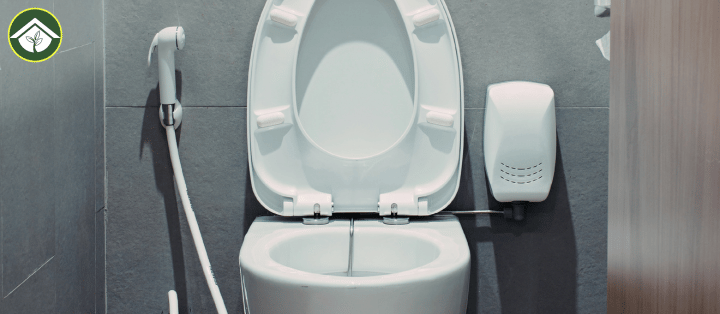
If you’ve ever wondered what the fuss is about regarding bidet toilet seats, you’re not alone. Many homeowners in the United States are still unfamiliar with a fixture that is already considered standard in much of Japan, Europe, and South America. A bidet toilet seat is simply a toilet seat replacement that incorporates a built-in water-cleansing system, allowing you to wash yourself after using the toilet without reaching for toilet paper. Whether you are exploring a basic non-electric bidet seat or eyeing a fully loaded electric bidet toilet seat with heated functions and remote control, understanding what a bidet toilet seat is — and how it works — is the first step toward transforming your bathroom experience.
What Is a Bidet Toilet Seat — The Core Bidet Toilet Seat Explanation:
The main purpose of a bidet toilet seat is to spray water to clean oneself after using the toilet. When in use, the bidet’s nozzle extends from underneath the seat to release a gentle stream of water to cleanse the user’s intimate regions.
Unlike a standalone bidet — the separate porcelain basin you might have seen in European hotels — a bidet toilet seat replaces your existing toilet seat entirely and adds bidet functionality directly to your current toilet. A bidet toilet seat attaches to your existing toilet and provides features like warm water washing, adjustable water pressure, and a heated seat, making it a more affordable and easier-to-install upgrade.
Bidet seat conversions are much easier and lower cost to install than traditional bidets, and have disrupted the market for the older fixtures. After a slow start in the 1990s, electronic bidets are starting to become more available in the United States. Today, over 80% of homes in Japan use bidet toilet seats. That number continues to grow in North America and the UK as more people discover the hygiene, comfort, and environmental advantages these seats provide.
A Brief History of the Bidet Toilet Seat:
The word “bidet” is French for “pony,” and in Old French, bider meant “to trot.” The concept originated in France centuries ago as a separate basin used for personal washing. Arnold Cohen created the bidet seat to ease his father’s pain from a medical condition. The electronic bidet system could easily wash and dry him and was convenient for douching and colonic irrigation. However, the United States was not ready, and due to abysmal sales, Arnold sold the patent to Toto, a conglomerate from Japan, who built the washlet, a bidet toilet combo. To this day, the washlet has been the most popular bidet toilet throughout Japan.
Electric Bidet Toilet Seat vs. Non‑Electric Bidet Seat — Which One Fits Your Bathroom:
One of the most important decisions when choosing a bidet seat is whether to go electric or non-electric. Both serve the same core function — cleaning you with water — but differ significantly in features, cost, and installation requirements.
Electric Bidet Toilet Seat — Features, Comfort, and Convenience:
Electronic bidet toilet seats come standard with a heated seat, and warm water front and rear wash. The temperature and pressure of the water are adjustable and everything is controlled by either a wall mounted remote control or an attached control panel.
Bidet toilet seats also have extra features, including warm water washes, heated seats, nightlights, deodorizers, and more. All of those luxury features do require power. For that reason, bidet toilet seats must be plugged into a GFCI outlet to function.
Electric models typically range from $200 to $1,000 depending on quality and feature set. They are the preferred option for users who want a fully hands-free, customizable, and luxurious bathroom experience.
Non‑Electric Bidet Seat — Simple, Affordable, and Effective:
Non-electric bidets are affordable and most toilets are compatible with them. Many non-electric models attach directly to the toilet bowl, underneath the existing toilet seat. Prices for non-electric models usually range from $20 to $200.
Non-electric bidet toilet seats, bidet attachments, and hand-held bidet sprayers use water pressure and feature manual controls. No power source is needed, and installation is easy.
While they lack heated seats and air dryers, non-electric bidet seats still provide effective and hygienic cleaning, often with stronger water pressure since they draw directly from your home’s supply line. For renters, budget-conscious buyers, or bathrooms without a nearby outlet, a non-electric model is a practical and highly capable solution.
Key Bidet Seat Features You Should Know About:
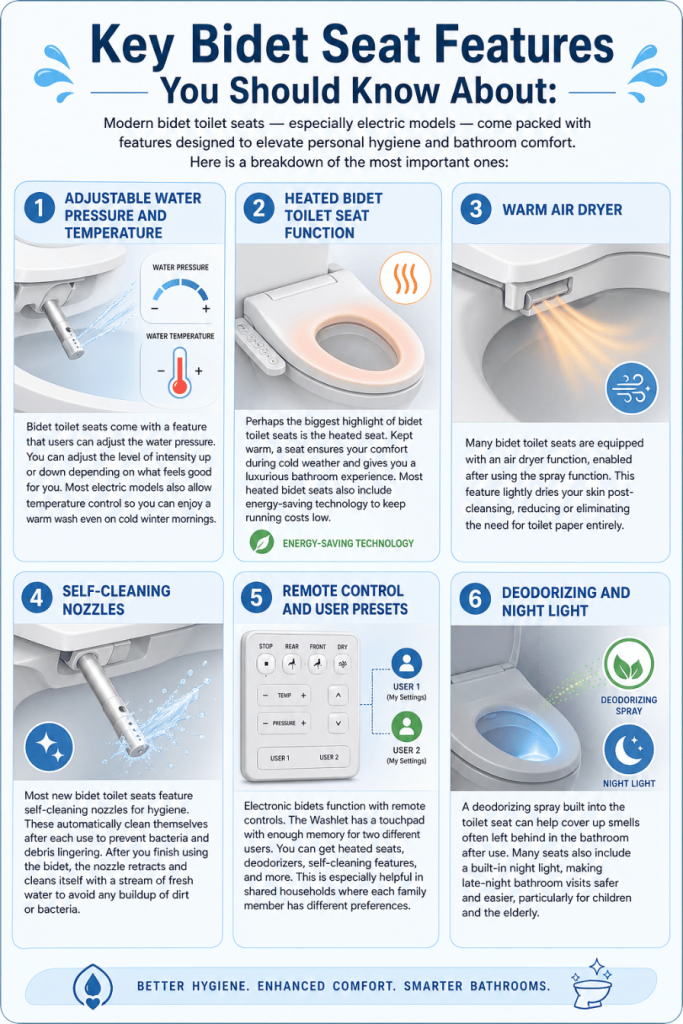
Modern bidet toilet seats — especially electric models — come packed with features designed to elevate personal hygiene and bathroom comfort. Here is a breakdown of the most important ones:
Adjustable Water Pressure and Temperature:
Bidet toilet seats come with a feature that users can adjust the water pressure. You can adjust the level of intensity up or down depending on what feels good for you. Most electric models also allow temperature control so you can enjoy a warm wash even on cold winter mornings.
Heated Bidet Toilet Seat Function:
Perhaps the biggest highlight of bidet toilet seats is the heated seat. Kept warm, a seat ensures your comfort during cold weather and gives you a luxurious bathroom experience. Most heated bidet seats also include energy-saving technology to keep running costs low.
Warm Air Dryer:
Many bidet toilet seats are equipped with an air dryer function, enabled after using the spray function. This feature lightly dries your skin post-cleansing, reducing or eliminating the need for toilet paper entirely.
Self-Cleaning Nozzles:
Most new bidet toilet seats feature self-cleaning nozzles for hygiene. These automatically clean themselves after each use to prevent bacteria and debris lingering. After you finish using the bidet, the nozzle retracts and cleans itself with a stream of fresh water to avoid any buildup of dirt or bacteria.
Remote Control and User Presets:
Electronic bidets function with remote controls. The Washlet has a touchpad with enough memory for two different users. You can get heated seats, deodorizers, self-cleaning features, and more. This is especially helpful in shared households where each family member has different preferences.
Deodorizing and Night Light:
A deodorizing spray built into the toilet seat can help cover up smells often left behind in the bathroom after use. Many seats also include a built-in night light, making late-night bathroom visits safer and easier, particularly for children and the elderly.
Bidet Seat Installation — What You Need to Know Before You Buy:
How to Install a Bidet Toilet Seat Step by Step:
Installing a bidet toilet seat is a straightforward DIY project for most homeowners. The process typically involves: turning off the water supply by locating the valve behind the toilet, removing the existing toilet seat by unscrewing the bolts, installing the bidet attachment or seat on the toilet bowl, reconnecting the toilet seat, attaching the bidet’s water supply hose to the toilet’s fill valve, and then turning on the water supply and checking for leaks.
For electric models, you will also need to plug the unit into a nearby GFCI outlet. The power outlet should be a special type called a GFCI, specifically designed for wet areas like bathrooms to help prevent electric shocks. If there is no outlet near your toilet, an electrician can typically install one easily.
Bidet Seat vs. Bidet Attachment — Understanding the Difference:
A bidet seat replaces your entire toilet seat and is a more integrated solution with additional features. A bidet attachment, by contrast, sits between your existing seat and bowl and is a slimmer, more budget-friendly option. Bidet attachments are the most popular type of bidet. These turn your toilet into a bidet by installing underneath your seat. People love bidet attachments for their hands-free washes.
Bidet Seat Benefits — Why More People Are Making the Switch:
Improved Hygiene and Cleanliness:
The biggest advantage of a bidet toilet is that washing with water is simply more hygienic than wiping with tissue. A bidet toilet gently cleans without irritation, which is especially helpful for people with sensitive skin.
Environmental and Cost Savings:
A family of four that switches to a mid-range bidet seat, uses the dryer most days, can slash paper use by approximately 70%. Many homes save $70–$200 per year or more on paper alone. The water used per wash is minimal — roughly one-eighth of a gallon per use — which is far less than the water used to manufacture toilet paper.
Health Benefits — Hemorrhoids, Skin Sensitivity, and More:
The popularity of add-on bidet units is steadily increasing in part because of their ability to treat hemorrhoids or urogenital infections. The gentle water wash eliminates the friction caused by repeated wiping, reducing inflammation and irritation significantly. Bidet features have been shown to help relax the body and even ease the symptoms of constipation, whether from a heated seat or from the wash of directed sprays.
Bidet Seat for Seniors — Accessibility, Independence, and Dignity:
Bidets are becoming increasingly popular with the elderly and disabled. Combined toilet and bidet installations make self-care toileting possible for many people, affording greater independence. There are often special units with higher toilet seats allowing easier wheelchair transfer, and with some form of electronic remote control that benefits individuals with limited mobility.
Electronic bidet toilet seats are especially useful for the elderly, the disabled, or folks with limited mobility who may have trouble operating non-electric bidets. Instead of having to reposition their bodies and fine-tune a control knob, they can simply press a button on a wall-mounted remote control.
Modern bidet toilets come equipped with user-friendly features like heated seats, warm air dryers, and remote controls. These not only add comfort but also promote independence for people with physical limitations. For seniors or those recovering from surgery, the hands-free experience can restore dignity and reduce reliance on caregivers.
Women-Friendly Bidet Seat — Why It Matters for Female Hygiene:
A bidet toilet seat is particularly valuable for women. Electric bidet seats equipped with a feminine wash function provide a gentler and more comprehensive cleaning experience. These functionalities consist of adjustable water pressure settings and temperature control for warm water preferences, alongside specially crafted nozzles angled towards delicate areas.
Bidet toilets are known to minimize irritation and lower the chances of infection by removing friction during wiping tasks — a benefit that is particularly advantageous for women with a predisposition to UTIs or skin sensitivities, according to numerous gynecologists who advocate for bidet use to promote better hygiene and comfort.
For women during menstruation, pregnancy, or postpartum recovery, the gentle front wash function offers significant relief and convenience. The front-to-back spray direction also reduces the risk of bacterial contamination, making bidet seats one of the most women-friendly bathroom upgrades available.
For more information on urinary health and hygiene practices, the U.S. National Library of Medicine’s MedlinePlus provides comprehensive guidance on maintaining urinary tract health.
Frequently Asked Questions:
What exactly is a bidet toilet seat?
A bidet toilet seat is a replacement toilet seat that integrates a water-spray nozzle for personal cleansing after using the toilet. It mounts directly onto your existing toilet, replacing the standard seat, and connects to your home’s water supply to provide a gentle, adjustable stream of water for hygiene. Electric models add features like heated seats, warm water, air drying, and remote control operation.
How does a bidet toilet seat work?
When in use, the bidet’s nozzle extends from underneath the seat to release a gentle stream of water to cleanse the user’s intimate regions. You can set the water pressure and temperature depending on the model, making the whole process feel comfortable and tailored to your needs. After cleansing, you can dry using the built-in warm air dryer, a small towel, or a few squares of toilet paper.
Do bidet toilet seats require electricity?
Not necessarily. Not all bidets need electricity — it depends on the type. Non-electric bidet toilet seats, bidet attachments, and hand-held bidet sprayers use water pressure and feature manual controls. No power source is needed, and installation is easy. Electricity is required for advanced features including heated seat, warm air dryer, and a nightlight.
How difficult is bidet seat installation?
For most non-electric models, installation is a simple DIY project taking 15 to 30 minutes. Most non-electric bidets can be installed within minutes without the need for professional help. They typically come with all necessary fittings and clear instructions, making the process hassle-free. Electric bidet seats require a nearby GFCI outlet, and if your bathroom lacks one, a licensed electrician can install it.
What is the difference between an electric and non-electric bidet seat?
Electronic bidet toilet seats come standard with a heated seat, and warm water front and rear wash, with temperature and pressure adjustable via wall-mounted remote control or attached control panel. Non-electric bidets most often only require a cold water line from the shut-off valve next to the toilet. Electric models offer more comfort and features; non-electric models are more affordable and simpler to install.
Are bidet toilet seats sanitary?
Yes. Today’s bidets are designed with safety and comfort in mind, so no parts of the bidet operation should come into contact with any contaminants. The retractable spray head feature of many models goes through a thorough self-cleaning and sanitation function before and after each use. Cleaning with water is inherently more hygienic than wiping with dry paper.
Can a bidet toilet seat fit any toilet?
Most bidet seats are designed to fit either round or elongated toilet bowls. Bidet washlet seats can be added to any standard toilet, whether a standard bowl or an elongated bowl. Before purchasing, always check the shape and dimensions of your toilet bowl and confirm compatibility with the bidet seat’s specifications.
Is a bidet toilet seat good for seniors and people with mobility issues?
Absolutely. An older adult with limited mobility can use gentle modes and user presets to reduce wiping strain. Remote controls, large buttons, and hands-free operation make electric bidet seats an excellent accessibility tool. Many geriatric health organizations recommend bidet seats as a way to promote bathroom independence for aging adults. You can read more about accessibility in bathroom design through the Americans with Disabilities Act (ADA) guidelines.
How is a bidet seat different from a bidet attachment?
A bidet seat replaces your entire existing toilet seat and offers more features, including rear and front wash, heating, and drying. A bidet attachment is a more affordable option that fits between your existing toilet bowl and toilet seat. It’s a great entry point into the world of bidets, typically offering basic washing functions controlled by a simple knob or lever. Bidet seats offer a more complete and comfortable experience; attachments are better for tight budgets.
Can a bidet toilet seat reduce toilet paper usage?
Yes, significantly. Using a non-electric bidet can reduce toilet paper consumption by up to 75%. This not only saves trees but also reduces the energy and water used in the production and transportation of toilet paper. For electric seats with air dryers, some households eliminate toilet paper almost entirely. According to National Geographic’s environmental reporting, Americans use significantly more toilet paper per capita than any other nation — making bidets one of the most impactful small changes a household can make.
Is a bidet toilet seat safe to use during pregnancy or postpartum recovery?
Yes. Bidet seats are widely recommended for pregnant and postpartum women because the gentle water wash avoids the friction and pressure of wiping, which can be painful or risky during sensitive recovery periods. Electric bidet seats equipped with a feminine wash function are particularly helpful during menstruation, pregnancy, postpartum healing processes, and for regular daily use. Always use gentle, low-pressure settings and front-to-back spray direction.
Will a bidet toilet seat increase my water bill noticeably?
No. Each use of a bidet requires only a small amount of water — roughly one-eighth of a gallon. If you add an electric seat, the extra electricity often costs about the price of one extra coffee per month, and the net savings still favor the bidet. The money saved on toilet paper far outweighs the marginal increase in water or electricity costs. The U.S. Environmental Protection Agency (EPA) provides useful guidance on water-saving practices in the home.
What features should I look for in a heated bidet toilet seat?
When shopping for a heated bidet toilet seat, prioritize adjustable seat temperature, adjustable water temperature, warm air dryer, and self-cleaning nozzles. Most heated bidet seats come with energy-saving technology, so you can enjoy the warmth without such big energy bills. Also look for user presets if multiple people share the bathroom, and a remote control for ease of use. The Wikipedia article on bidets provides a thorough historical and technical overview of bidet types and global adoption rates.
Does a bidet toilet seat affect my toilet’s plumbing?
No. A simple DIY connection below the toilet’s fill valve delivers clean water to the bidet seat. The bidet taps into the same supply line that fills your toilet tank. It does not alter the toilet’s flush system or drainage. Bidet water is always drawn from the clean supply line — never from the toilet bowl or tank.
Are bidet toilet seats covered by health insurance or HSA/FSA accounts?
In many cases, yes. Several bidet manufacturers now accept Health Savings Account (HSA) and Flexible Spending Account (FSA) payments, as bidet seats can qualify as medical devices — especially for individuals with mobility limitations, post-surgical needs, or conditions like hemorrhoids. Check with your benefits provider and consult the IRS Publication 502 on qualified medical expenses to determine eligibility.
Making the switch to a bidet toilet seat is one of the most impactful upgrades you can make to your bathroom — improving hygiene, reducing environmental waste, lowering costs, and enhancing comfort for every member of your household. Whether you start with an affordable non-electric model or invest in a fully featured heated electric seat, the benefits are immediate and long-lasting.


Leave a Reply