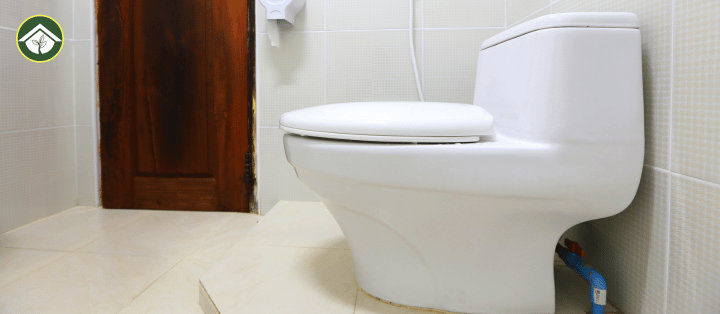
Toilet seats are one of those everyday fixtures that most people never think twice about — until it’s time to replace one, renovate a bathroom, or simply learn what options actually exist. Yet behind this seemingly simple bathroom component lies a surprisingly broad world of shapes, sizes, materials, types, and features that can make a real difference in comfort, hygiene, and bathroom design.
From the classic round seat found in older homes to modern elongated designs, soft-close mechanisms, and feature-rich bidet toilet seats, the variety available today reflects just how much this overlooked fixture has evolved. Whether you are a homeowner, a renter, or simply someone curious about how it all works, understanding toilet seats properly helps you make better decisions — now and in the future.
This guide covers the full picture: types of toilet seats, different styles and materials, shapes, sizes, dimensions, components, and height considerations. It is designed as a broad overview — each topic is introduced clearly here, with dedicated deep-dive articles to follow on every major section.
What Is a Toilet Seat, Really?
A toilet seat is the hinged unit that sits on top of a toilet bowl, consisting of the seat itself and, in most cases, a lid. Its job goes beyond simple comfort — it creates a sanitary barrier between the user and the porcelain bowl, makes cleaning easier, and contributes significantly to the overall look of a bathroom. It’s a hinged unit with a seat and lid covering the toilet bowl that makes sitting comfortable and helps stop the spread of germs by being easy to clean.
Despite being one of the most frequently used fixtures in any home, toilet seats are often the last thing people think carefully about — until the old one breaks, wobbles, or simply looks dated.
Types of Toilet Seats:
Understanding the different types of toilet seats is the first step toward making the right choice. The market today offers far more variety than the basic plastic seat most people grew up with.
Standard Toilet Seats:
The traditional standard seat is what most households have — a simple seat-and-lid combination available in plastic or wood. These come in round and elongated shapes (more on that shortly) and are the most affordable, widely available option on the market.
Soft-Close Toilet Seats:
One of the most popular upgrades in modern bathrooms, soft-close seats use dampened hinges to lower the lid slowly and silently. No more middle-of-the-night slamming. Soft-close mechanisms stop slamming and add antimicrobial coatings to fight germs. These are available across all shapes and most price ranges, making them an easy improvement for almost any bathroom.
Bidet Toilet Seats:
A toilet-seat bidet can be added onto your toilet at any time — it replaces your current seat with one that has a bidet already installed, and all you have to do after installing the toilet seat bidet is connect the water hose to a T-valve which connects to the toilet’s water line. These seats have exploded in popularity in North America and come in two broad categories: electric and non-electric. Electric bidet seats offer advanced features like heated seats, water temperature control, and adjustable nozzles, while non-electric versions are more basic and affordable, relying on your home’s water pressure for operation.
Heated Toilet Seats:
Separate from full bidet functionality, heated seats simply warm the seat surface — a small luxury that makes a significant difference on cold mornings. Adjustable heated toilet seats add comfort during cold weather, letting you control the temperature so you can choose your preferred warmth level.
Raised or Comfort Toilet Seat:
Designed for accessibility, raised seats add height to a standard toilet bowl to assist elderly users, those recovering from surgery, or anyone with limited mobility. These are covered more thoroughly in the section on toilet seat height.
Open-Front (U-Shaped) Seats:
U-shaped toilet seats, commonly seen in public restrooms, feature an open front design that improves hygiene by allowing easier cleaning and preventing direct contact with the front of the seat. In the U.S., U-shaped seats are legally required in public restrooms due to their hygienic benefits.
Different Styles of Toilet Seats: A Quick Look at Materials:
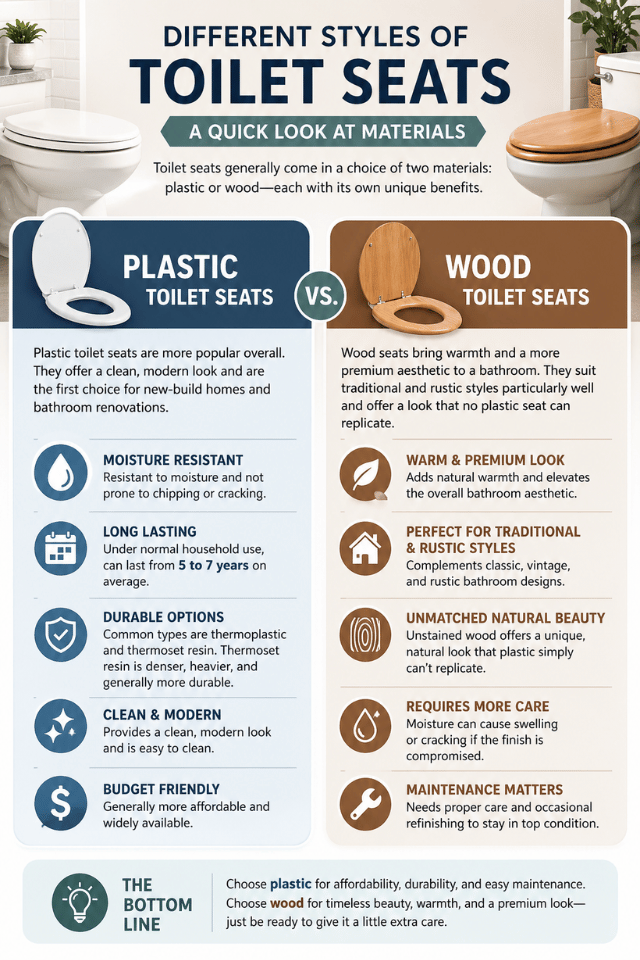
When it comes to materials, the two dominant choices for toilet seats are plastic and wood, and each has a distinct personality.
Plastic Toilet Seats:
Plastic toilet seats are more popular overall. They offer a clean, modern look and are the first choice for new-build homes and bathroom renovations. By design, they are resistant to moisture and aren’t prone to chipping or cracking. Under normal household use, a plastic toilet seat can last from five to seven years on average. The most common plastic types are thermoplastic and thermoset resin, with the latter being denser, heavier, and generally considered more durable.
Wood vs. Plastic Toilet Seats:
Toilet seats generally come in a choice of two materials: plastic or wood. Plastic seats are more common — they are cheaper, more malleable, and easy to clean. Wood seats, by contrast, bring warmth and a more premium aesthetic to a bathroom. They suit traditional and rustic bathroom styles particularly well, and unstained wood seats offer a look that no plastic seat can replicate. The trade-off is that wood requires more careful maintenance, since moisture can cause swelling or cracking over time if the finish is compromised.
Toilet Seat Shapes Explained:
Toilet seats come in various shapes that cater to different toilet designs and user preferences. The most common shapes include round, elongated, hybrid, square, and D-shaped. Each has a specific comfort level and installation requirement.
Round Toilet Seats:
Round toilet seats are traditionally found in older homes or compact bathrooms. Their circular shape fits bowls with a shorter length — typically around 16.5 inches from the mounting holes to the front of the bowl. They are an excellent space-saving solution, ideal for smaller toilets where space is at a premium.
Elongated Toilet Seats:
Elongated toilet seats are commonly used in modern homes and commercial spaces. They are typically 18.5 inches in length, offering a more oval shape that provides greater seating comfort for adults. The elongated design is considered more ergonomic and is ideal for taller individuals or those seeking enhanced hygiene and cleanliness.
Round vs. Elongated Toilet Seat: Which Is Better?
This is one of the most frequently asked questions when shopping for a new seat. The honest answer is that it depends entirely on your toilet bowl and your bathroom size. You can’t replace a round seat with an elongated one — the toilet seat dimensions and shape must match the bowl for a proper fit. Beyond compatibility, elongated seats tend to be preferred by adults for comfort, while round seats make more sense in compact spaces or children’s bathrooms.
D-Shaped and Square Seats:
Square seats are common in minimalist styled bathrooms — they are modern, generally soft-close, and angular, making them great for people who want to add a modern touch. D-shaped toilet seats are also modern and stylish, offering a slightly softer aesthetic for those who want a contemporary feel without going overboard.
Toilet Seat Sizes and Dimensions:
Getting the size right is arguably the most critical practical step when buying a new toilet seat. Measure wrong, and you will be making a return trip to the store.
Standard Toilet Seat Size:
Round seats measure 16.5 inches and elongated seats measure 18.5 inches. These are the two standard toilet seat dimensions you will encounter in most US and UK homes, and the vast majority of replacement seats are built to these measurements.
How to Measure Toilet Seat Dimensions:
Taking proper toilet seat measurements involves three key numbers. Get a correct measurement of the length by placing the tip of your measuring tape at the back outer edge of your toilet seat and measuring to the front outer edge. To get the exact width, measure from the left outer edge to the right outer edge. Also measure the distance between the two bolts that connect the hinges of the toilet seat to the toilet base.
Standard Toilet Seat Dimensions at a Glance:
- Round seat length: approximately 16.5 inches.
- Elongated seat length: approximately 18.5 inches.
- Standard bolt spread (distance between mounting holes): approximately 5.5 inches.
- Seat width (round): approximately 14–14.5 inches.
- Seat width (elongated): approximately 14–14.5 inches.
Toilet seat size is a crucial factor often overlooked when purchasing a new seat. Choosing the right fit ensures comfort, functionality, and aesthetic harmony with your bathroom. Seat sizes generally depend on three key measurements: length, width, and the distance between mounting holes. Knowing these helps you avoid returns or seat wobble.
Toilet Seat Height: What You Need to Know:
Toilet seat height does not refer to the seat itself but to the overall height of the toilet from floor to the top of the seat — and it matters enormously for comfort and accessibility.
Standard Height:
The distance from the floor to the toilet seat on a standard toilet is typically between 14.5 to 16 inches. This height works well for most adults, petite users, and children.
Comfort Height (ADA Height):
Comfort height toilets range from 17 to 19 inches high, about as tall as a standard dining room chair. Many people find this height easier to maneuver, and it meets ADA requirements. A comfort height toilet reduces strain on knees and hips, making it ideal for adults, tall users, and people with mobility issues.
The choice between standard and comfort height ultimately comes down to who uses the bathroom most. Households with young children typically find standard height more practical, while older adults or taller individuals tend to prefer the comfort height option.
Toilet Seat Components: What Makes Up a Toilet Seat?
Most people never think about what their toilet seat is made of beyond the surface they sit on. But understanding the toilet seat components helps when replacing parts or evaluating quality.
A standard toilet seat assembly includes the seat itself, the lid, and the hinge mechanism. The hinge — often called the fitting or mounting hardware — is one of the most important components affecting durability. Plastic toilet seats are available with a few different types of hinge materials: plastic, metal, or brass. If you’re looking for the most durable plastic toilet seat, opt for one designed with metal hinges.
For bidet toilet seats, the component list grows significantly. Regardless of format, bidet seats share a common set of components: a water inlet that connects to your home’s water line via a T-valve, a control mechanism such as a side lever or electronic panel, nozzles for directing the water spray, and backflow protection to prevent contaminated water from re-entering the supply.
Other toilet seat parts worth knowing about include:
- Mounting bolts: Secure the hinge to the toilet bowl. These can be plastic or metal.
- Hinge cover caps: Decorative covers that conceal the mounting hardware.
- Bumpers: Small rubber or plastic feet on the underside of the seat that prevent it from sliding and protect the porcelain.
Frequently Asked Questions About Toilet Seats:
How do I know if my toilet is round or elongated?
Measure from the center of the mounting bolt holes at the back of the toilet to the front edge of the bowl. A round toilet bowl will measure approximately 16.5 inches in length, while an elongated bowl is approximately 18.5 inches.
Are Toilet Seats Universal?
No, not all toilet seats are universal. While there are several standard toilet seat sizes, the exact width, length, and shape can vary significantly depending on the brand, toilet model, and country of origin. If you’re planning to replace your toilet seat, it’s essential to measure your current toilet carefully.
Are all toilet seats the same size?
No. Toilet seats are designed to fit one of two bowls — round or elongated. A round toilet seat absolutely won’t fit an elongated bowl, and the opposite is also true.
How long does a toilet seat last?
Under normal use, most plastic toilet seats last five to seven years. Wood seats can last longer if well maintained, while high-quality thermoset seats are generally the most durable option.
What is the difference between thermoplastic and thermoset toilet seats?
Thermoplastic seats are lightweight and budget-friendly but can flex under weight and may yellow over time. Thermoset (or urea resin) seats are denser, heavier, and more resistant to staining and scratching — they hold their color and shape far better.
Can I install a toilet seat myself?
Yes, for standard seats this is a beginner-level DIY task requiring only a screwdriver and a few minutes. Bidet seats require a bit more effort — connecting a water supply line — but are still well within the reach of most homeowners following the manufacturer’s instructions.
What toilet seat height is best for seniors?
Comfort height toilets meet ADA guidelines for accessible toilets and provide the height needed for people who use wheelchairs. The toilet seat height of 17 to 19 inches makes it safer and easier to sit and stand for older adults or people with disabilities.
Wrapping It All Up:
Toilet seats touch almost every consideration in bathroom design: comfort, hygiene, accessibility, style, and budget. Whether you are weighing the classic round vs. elongated toilet seat debate, trying to figure out the right toilet seat dimensions for a replacement, exploring bidet options, or just trying to understand what your toilet seat is actually made of — there is more depth to explore in every category.
This guide is intentionally broad. Each section above — from the different styles of toilet seats and materials to bidet seat components and toilet seat height — deserves (and will receive) a full, dedicated article. Think of this as your map. The sections that matter most to your situation are the ones worth reading in detail next.
The most important takeaway? Measure before you buy, know your bowl shape, and choose a material that suits both your lifestyle and your bathroom’s aesthetic. Everything else is refinement.


Leave a Reply