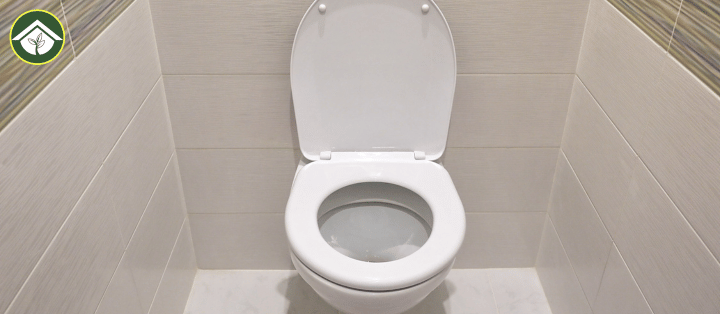
Walking into a public restroom and facing a shared toilet seat is one of those small but universally uncomfortable moments. Whether you’re at an airport, a highway rest stop, a shopping mall, or a music festival, the question is always the same: is it safe to sit down? That’s exactly where disposable toilet seat covers come in — thin, single-use hygiene barriers designed to sit between you and a potentially contaminated surface. But there’s far more to know than simply pulling one from a dispenser and placing it down. From choosing the best toilet seat liners for public restrooms to understanding eco-friendly disposable toilet seat covers and portable options for travel, this complete guide covers everything you need to make a smart, clean, and sustainable choice.
What Are Disposable Toilet Seat Covers and How Do They Actually Work:
Disposable toilet seat covers — also called toilet seat liners disposable products — are single-use sheets shaped to match the outline of a standard toilet seat. They create a physical barrier between your skin and the seat surface, reducing direct contact with any bacteria, moisture, or residue left behind by previous users.
According to public health microbiologists cited by Reader’s Digest, while covers are porous at a microscopic level and cannot block every microorganism, they do deliver meaningful benefits: they reduce direct skin contact, absorb residual moisture on the seat, and provide significant psychological reassurance — which in turn encourages people to sit properly rather than hover uncomfortably.
Most covers are made from thin paper pulp, recycled cellulose fibers, or advanced ecopolymer materials. They are generally shaped like the letter “U” or an oval with a perforated center flap designed to hang into the toilet bowl, so when you flush, it pulls the entire cover away cleanly — no touching required.
How to Use Disposable Toilet Seat Covers Correctly:
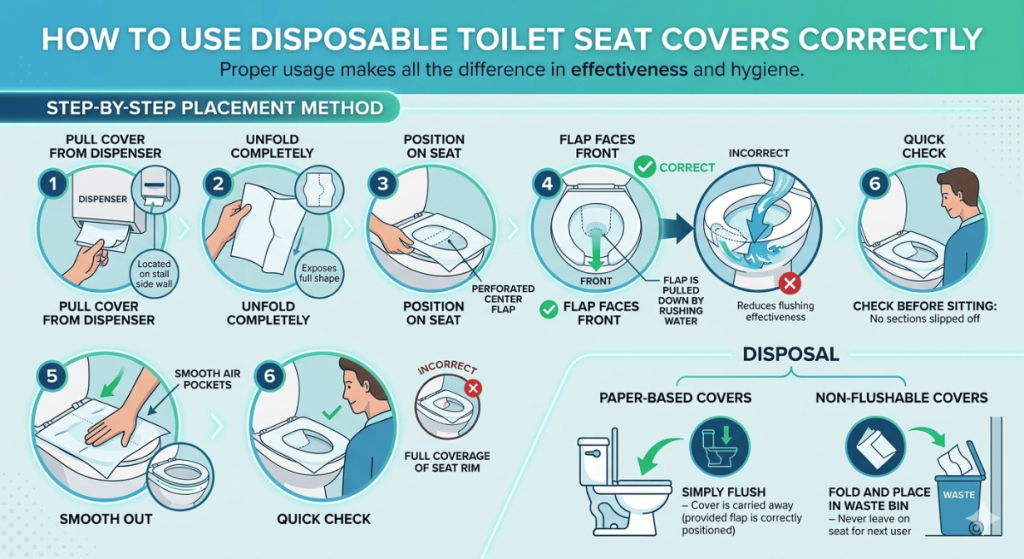
Knowing how to use disposable toilet seat covers the right way makes all the difference in how effective they are. Many people unknowingly position them incorrectly, which reduces coverage and hygiene protection.
The Step-by-Step Placement Method:
Pull one cover from the wall-mounted dispenser (usually located on the side wall of the stall). Unfold it completely to expose the full shape of the seat cover. Position it on the toilet seat so the perforated center flap hangs into the front of the bowl — not the back. This front-facing flap placement ensures the cover gets pulled down and flushed the moment water rushes through the bowl. Smooth out any air pockets so the cover lies flat and covers every part of the seat rim. Before sitting, give the cover a quick check to make sure no section has slipped off.
After Use — Proper Disposal:
For paper-based covers, simply flushing the toilet should carry the cover away automatically, provided the flap is correctly positioned at the front. For covers that aren’t labeled flushable, fold and place them in the waste bin provided in the stall — never leave them on the seat for the next user.
The Best Toilet Seat Liners for Public Restrooms — What to Look For:
Not all seat covers are created equal. When choosing the best toilet seat liners for public restrooms, whether you’re a facility manager or a frequent traveler, several factors determine quality and reliability.
Material and Strength:
Premium covers use a multi-layer construction — typically soft wood pulp on the outside with a reinforced inner layer — that resists tearing and slipping during use. Flimsy single-ply paper covers may shift or tear, defeating the purpose entirely. Research published in the journal Applied Sciences (MDPI, 2024) confirmed that the ideal flushable cover requires rapid water absorption for disintegration after flushing, combined with sufficient structural strength to withstand movement while in use.
Size and Fit:
Standard covers measure approximately 18 × 15 inches and are designed to fit most commercial and residential toilet seats. XL versions are available for elongated toilet seats common in newer facilities and ADA-compliant restrooms.
Certifications and Standards:
Look for covers tested for septic safety, biodegradability (OECD301B standard for complete decomposition), and non-toxicity. Reputable products carry documentation confirming they contain no microplastics, adhesives, or glues that could harm plumbing or waterways.
Flushable Toilet Seat Covers — Are They Safe to Flush:
The “flushable” label on toilet seat covers is an area of genuine debate. Traditional thin paper covers made from virgin wood pulp are generally safe to flush, as they break down similarly to toilet paper. Modern flushable toilet seat covers engineered with water-soluble ecopolymer technology go a step further: they dissolve in water before ever reaching the sewage system, leaving no residue and no clog risk.
However, not all products labeled flushable meet the same standard. The key distinction is whether a cover breaks apart or fully dissolves in water. Covers that only break apart can still accumulate in older plumbing or contribute to fatberg formation in municipal sewage pipes. Always check manufacturer documentation, and in regions with older infrastructure or septic systems, disposing of covers in the waste bin remains the safest option.
Eco-Friendly Disposable Toilet Seat Covers — Sustainability Without Compromise:
Growing environmental awareness has pushed eco-friendly disposable toilet seat covers to the forefront of the hygiene products market. The most environmentally responsible options share several characteristics.
What Makes a Cover Truly Eco-Friendly:
Biodegradable covers made from 100% virgin wood pulp sourced from responsibly managed forests break down fully in water and soil. Covers made from water-soluble ecopolymers — a newer technology — dissolve completely and do not shed microplastics, which is increasingly important as environmental agencies worldwide crack down on microplastic pollution. Packaging also matters: heat-pressed biodegradable paper packaging, free of plastics, glues, and adhesives, completes a fully sustainable product lifecycle.
Plastic toilet seat covers, by contrast, are non-biodegradable and persist in landfills and oceans for decades. If environmental impact is a concern — for personal use or institutional procurement — choosing certified paper or ecopolymer covers over plastic alternatives is a clear upgrade.
Toilet Seat Cover Dispenser for Public Restrooms — Choosing and Installing the Right One:
A toilet seat cover dispenser for public restroom use is more than a practical convenience — it’s a facility investment with hygiene, accessibility, and aesthetic implications.
Dispenser Types:
Surface-mounted dispensers are the most common and easiest to install, attaching directly to the stall wall. Recessed dispensers sit flush with the wall, offering a cleaner visual appearance. Combination units integrate seat cover dispensers with toilet tissue holders and sanitary napkin disposals in one compact unit, ideal for smaller stalls.
ADA Compliance Requirements:
The 2010 ADA Standards for Accessible Design specify that seat cover dispenser openings must be mounted between 15 and 48 inches above the finished floor. Dispensers must also be operable with no more than 5 pounds of force and without requiring tight grasping, pinching, or twisting — ensuring accessibility for users with limited dexterity. All dispensers must be positioned in front of the water closet within the stall, not behind it.
Top Brands for Commercial Use:
Industry leaders in commercial restroom accessories — including Bobrick, Bradley Corporation, and Tork USA — offer ADA-compliant seat cover dispensers in stainless steel and powder-coated finishes suited to high-traffic commercial environments.
Portable Toilet Seat Covers for Travel — Hygiene On the Go:
For frequent travelers, commuters, and parents managing potty training, portable toilet seat covers for travel are among the most practical hygiene products available. Individually wrapped covers pack flat into a purse, backpack, diaper bag, or carry-on luggage without adding meaningful bulk or weight.
Travel-format covers are especially valuable in airports and railway stations, roadside rest stops and petrol stations, outdoor festivals and camping sites, and destinations with variable sanitation standards. The Centers for Disease Control and Prevention (CDC) consistently emphasizes that thorough handwashing after restroom use remains the single most effective hygiene practice — but using a seat cover ensures you’re comfortable sitting properly, which doctors note is healthier than hovering, as the latter can strain pelvic floor muscles and prevent complete bladder emptying.
FAQ: Disposable Toilet Seat Covers
Are disposable toilet seat covers actually effective at blocking germs?
Partially. Seat covers made from standard paper pulp are porous, meaning microscopic organisms can technically pass through the material. However, they meaningfully reduce direct skin contact with the seat surface, absorb any moisture or residue present, and encourage proper seated posture rather than hovering. Covers made from ecopolymer technology — a denser, water-soluble film — provide a stronger barrier against contaminants including common viruses and bacteria.
Can you catch an STI or serious infection from a public toilet seat?
This concern is extremely common but largely unfounded. The CDC and the National Institutes of Health (NIH) have both confirmed that sexually transmitted infections cannot be contracted from toilet seats, as the pathogens responsible for STIs cannot survive on cold, hard surfaces for long enough to cause transmission. The primary hygiene risk in public restrooms comes from touching contaminated high-touch surfaces such as flush handles, taps, and door knobs — followed by touching your face before washing your hands.
What is the correct way to place a disposable toilet seat cover?
Pull the cover from the dispenser, unfold it fully, and place it on the toilet seat with the perforated center flap hanging into the front of the bowl — not the back. This positioning ensures the flap is caught by the flush water and pulls the entire cover down automatically when you finish. Smooth the cover flat to ensure complete seat coverage before sitting.
Are all toilet seat liners disposable or can some be reused?
Standard toilet seat covers are designed for single use only and should be discarded immediately after each use. Some premium public restrooms use automatic rotating plastic sleeve systems (such as those used in Sani-Seat dispensers) that present a fresh, untouched portion of material for each user — these are mechanically refreshed, not manually reused. For personal or home use, fabric washable covers exist but are not relevant to the public hygiene context.
Are flushable toilet seat covers safe for septic systems?
Certified flushable seat covers made from virgin wood pulp or water-soluble ecopolymers are generally safe for septic systems when used as directed. Always verify the product carries a septic-safe certification or manufacturer confirmation. If in doubt — especially in older buildings or rural properties with sensitive septic infrastructure — dispose of covers in the waste bin rather than flushing.
What materials are eco-friendly disposable toilet seat covers made from?
The most sustainable options are made from 100% virgin wood pulp sourced from certified managed forests, or from water-soluble ecopolymers that dissolve completely without shedding microplastics. Both material types are biodegradable and break down safely in water and wastewater systems. Avoid covers made from conventional plastic, which persist in landfills and oceans for decades.
How do portable toilet seat covers for travel differ from restroom dispenser covers?
Travel covers are individually wrapped for hygiene, compact enough to fit in a small bag, and often sold in packs of 10–60 for personal use. Restroom dispenser covers are bulk-packaged (typically 250–5,000 per box) in half-fold or quarter-fold configurations designed to feed through wall-mounted commercial dispensers. Both serve the same hygienic function; the difference is in packaging format and quantity.
What size toilet seat cover do I need for an elongated toilet seat?
Standard toilet seat covers measure approximately 15 × 18 inches and fit most round or standard oval toilet seats. For elongated toilet seats — which are longer front-to-back and increasingly common in modern and ADA-accessible restrooms — look for covers specifically labeled XL, which provide full coverage without gaps at the front of the seat.
Do toilet seat cover dispensers need to be ADA compliant?
Yes, in any public restroom in the United States that falls under ADA jurisdiction (which includes most commercial and public facilities). The 2010 ADA Standards for Accessible Design require seat cover dispenser openings to be mounted between 15 and 48 inches above the finished floor, positioned in front of the water closet, and operable with no more than 5 lbs of force without requiring pinching or twisting.
Is it better to use a seat cover or to hover above a public toilet seat?
Using a seat cover is the medically preferred option. Hovering places strain on the pelvic floor muscles and often prevents the bladder from emptying fully — a pattern that, over time, can contribute to urinary tract issues. Seat covers allow you to sit in the natural, ergonomically correct posture while still minimizing contact with the seat surface.
Can children use disposable toilet seat covers?
Yes, and many travel-format seat covers are specifically sized or marketed for children’s potty training and use in public restrooms. XL covers that fold down provide better coverage for smaller bodies on standard adult-sized seats. For young children still in the early stages of potty training, portable covers help make unfamiliar public toilets less intimidating.
How many toilet seat covers does a public restroom need to stock?
This depends entirely on traffic volume. A rough industry guideline is to count the average number of daily restroom users and assume roughly 60–70% will use a cover. A typical high-traffic public restroom in a shopping mall or transport hub may require 500–1,000 covers per stall per day. Bulk packaging in 250- to 5,000-count boxes is the standard procurement format for commercial facilities, and combination dispensers that hold multiple cover packs reduce refill frequency.
Are there toilet seat covers designed for outdoor and camping use?
Yes. Several travel-format disposable seat cover brands specifically market products for camping, hiking, outdoor festivals, and portable toilet situations. These covers are individually wrapped for compactness, water-resistant enough to work on slightly damp surfaces, and biodegradable so they can be disposed of responsibly in waste bags when no flush toilet is available.
Do disposable toilet seat covers expire or have a shelf life?
Most paper and ecopolymer seat covers do not have a formal expiration date, but storage conditions matter. Covers stored in humid environments may absorb ambient moisture and become fragile or difficult to unfold correctly. Individually wrapped covers maintain their integrity longer than bulk-dispensed products, which are exposed to the restroom environment continuously. For personal travel packs, storing covers in a sealed zip pouch within your bag is the best practice.
Where can I buy toilet seat liners disposable in bulk for a business?
Commercial quantities of disposable toilet seat covers are available from janitorial supply distributors, office supply retailers, and wholesale platforms. Brands including Kimberly-Clark, Scott, Boardwalk, Genuine Joe, and Hospeco offer bulk counts of 250 to 5,000 in half-fold and quarter-fold formats compatible with most standard wall-mounted dispensers. For eco-certified products, look for FSC-certified or OECD301B-tested options from specialty hygiene suppliers.


Leave a Reply