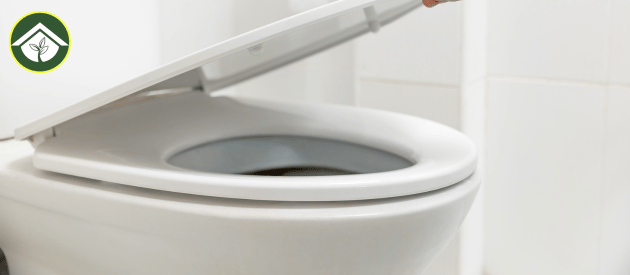
Whether you’re renovating your bathroom, dealing with a broken hinge, or simply curious about upgrading your toilet lid cover, this comprehensive guide covers everything you need to know. From understanding standard toilet lid sizes and shapes to selecting the perfect color, and from basic removal steps to full replacement procedures — this is your one-stop resource for all things toilet lid.
What Is a Toilet Lid and Why Does It Matter?
The toilet lid is the hinged cover that sits on top of the toilet bowl. Often overlooked, it plays a surprisingly important role in bathroom hygiene, aesthetics, and functionality. A properly fitted lid keeps odors contained, prevents items from accidentally falling into the bowl, and adds a polished look to your bathroom.
There are two primary lids associated with a toilet: the toilet tank lid (also called the cistern lid), which covers the water tank at the back, and the toilet bowl lid, which is part of the toilet seat assembly. Both can be replaced, repaired, or dressed up with covers — and this guide walks you through all of it.
Toilet Lid Sizes: What You Need to Know:
Standard Toilet Lid Size:
Before purchasing a replacement lid or a decorative cover, knowing your toilet’s measurements is essential. Most residential toilets in the United States follow standard sizing, but there can be meaningful variation between manufacturers and models.
Standard Toilet Tank Lid Dimensions:
A standard toilet tank lid typically measures around 7.5 to 8.5 inches wide and 18 to 20 inches long, though this varies widely depending on the brand. Tank lids are not universally interchangeable — an American Standard tank lid may not fit a Kohler tank, and vice versa.
Standard Toilet Seat Lid Dimensions:
For the seat assembly (the part you sit on, including the lid portion):
- Round bowl lids measure approximately 16.5 inches in length.
- Elongated bowl lids measure approximately 18.5 inches in length.
Always measure your existing lid before ordering a replacement. Measure from the seat bolt holes to the front of the bowl, and from hinge to hinge across the back.
How to Measure Your Toilet Lid:
- Measure from the center of one bolt hole to the other (typically 5.5 inches for most standard toilets).
- Measure the total length of the seat from the bolt holes to the front.
- Note the width at the widest point.
- Check the manufacturer’s label (often under the tank lid or inside the tank) for a model number.
Toilet Lid Shapes:
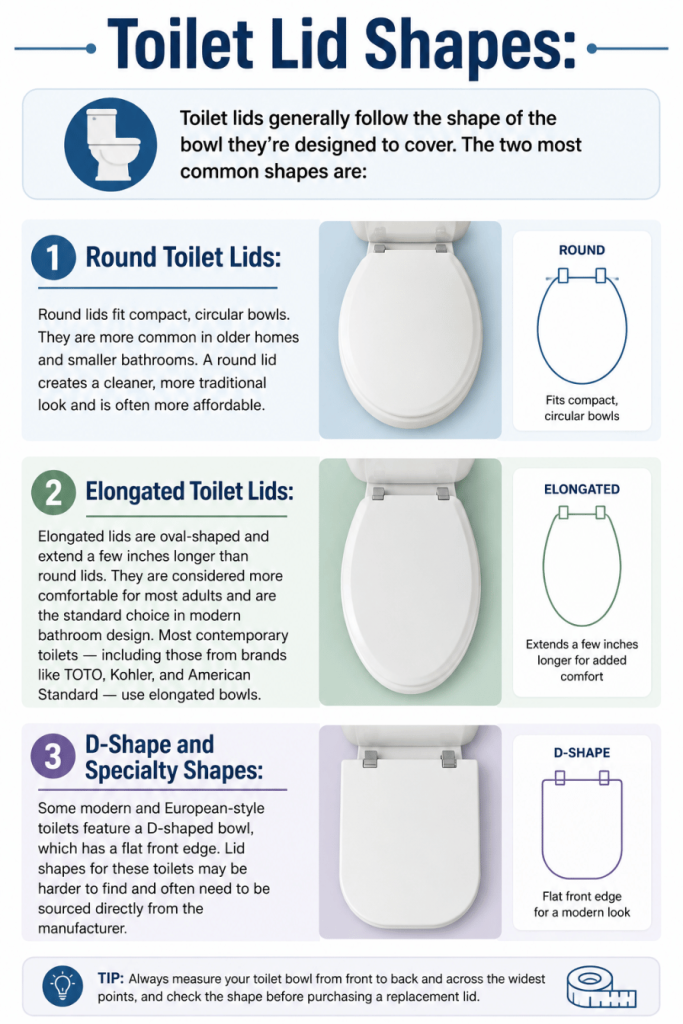
Toilet lids generally follow the shape of the bowl they’re designed to cover. The two most common shapes are:
Round Toilet Lids:
Round lids fit compact, circular bowls. They are more common in older homes and smaller bathrooms. A round lid creates a cleaner, more traditional look and is often more affordable.
Elongated Toilet Lids:
Elongated lids are oval-shaped and extend a few inches longer than round lids. They are considered more comfortable for most adults and are the standard choice in modern bathroom design. Most contemporary toilets — including those from brands like TOTO, Kohler, and American Standard — use elongated bowls.
D-Shape and Specialty Shapes:
Some modern and European-style toilets feature a D-shaped bowl, which has a flat front edge. Lid shapes for these toilets may be harder to find and often need to be sourced directly from the manufacturer.
Toilet Lid Colors: Choosing the Right Shade:
The color of your toilet lid — both the hard lid on the seat and any decorative cover — can tie your bathroom’s decor together. Here are the most popular options:
White Toilet Lid Cover:
A white toilet lid cover is the most classic and universally popular choice. It pairs effortlessly with white porcelain, blends into most color schemes, and gives bathrooms a clean, hygienic appearance. White is the go-to option for rental properties and minimalist interiors.
Black Toilet Lid:
A black toilet lid or a white toilet with black lid combo creates a bold, modern contrast. Black fixtures are increasingly popular in contemporary bathroom design, adding drama and sophistication. A black seat on a white toilet has become a favorite choice for homeowners going for a monochrome or industrial aesthetic.
Grey Toilet Lid Cover:
A grey toilet lid cover works beautifully in neutral, Scandinavian-inspired, or spa-like bathrooms. Grey is versatile — it can be paired with white, wood tones, or navy accents without clashing.
Pink Toilet Lid Cover:
For retro, vintage, or playful bathroom styles, a pink toilet lid cover brings charm and personality. The toilet lid cover pink options range from soft blush tones to vibrant hot pinks. Pink bathroom accessories experienced a resurgence in popularity as vintage decor trends came back in fashion.
Other Popular Colors:
- Beige and almond (popular in older homes).
- Navy blue and teal (for bold accent bathrooms).
- Champagne and gold (for luxury or glam-style bathrooms).
Different Types of Toilet Lid Covers:
Toilet lid covers are soft fabric or decorative covers placed over the hard lid to add comfort, warmth, and style. Here’s what’s available:
Fabric Toilet Lid Covers:
Fabric covers — usually made from cotton, chenille, or microfiber — add a soft, cozy feel, especially in cold climates. They are machine washable and come in virtually every color, including the popular pink toilet lid cover, white toilet lid cover, and grey toilet lid cover options.
Memory Foam Toilet Lid Covers:
A step up from standard fabric, memory foam covers provide extra cushioning and a more premium feel underfoot when the lid is down.
Bamboo and Wooden Toilet Lid Covers:
For eco-friendly and natural aesthetics, bamboo or wood-finish covers offer a distinctive look that pairs well with spa or nature-themed bathrooms.
Embroidered and Patterned Covers:
These decorative options bring personality and artistry to the bathroom. Floral, geometric, and seasonal patterns are widely available.
How to Remove a Toilet Lid:
How to Remove a Toilet Tank Lid:
Removing the toilet tank lid (cistern lid) is simple:
- Grip the tank lid firmly with both hands.
- Lift straight up — there are no screws or attachments.
- Set it aside carefully on a flat, padded surface (tank lids are heavy porcelain and break easily).
How to Remove a Toilet Seat Lid (With Screws):
Most toilet seats are attached with two bolts at the back:
- Locate the plastic bolt caps near the seat hinges and pop them open.
- Use a screwdriver or wrench to loosen the nuts from underneath.
- Slide the seat and lid forward and lift off.
How to Remove a Toilet Lid Without Screws:
Some modern toilet seats use a tool-free mounting system:
- Look for a release button or tab on the underside of the hinge.
- Press and hold the release button while sliding the seat backward.
- The seat and lid should detach from the mounting posts.
If there are no visible screws or release buttons, check for a decorative cap on top of the hinge that conceals the bolt underneath.
How to Take Off a Toilet Lid That’s Stuck:
If the seat has been in place for years, the nuts may be corroded or fused:
- Apply penetrating oil (like WD-40) and let it sit for 15–20 minutes.
- Use pliers or a seat removal tool to break the corrosion.
- If the bolt spins freely and won’t loosen, hold the top bolt with a flathead screwdriver while turning the nut underneath.
How to Fix a Toilet Lid:
How to Tighten a Toilet Seat Lid:
A wobbly or shifting toilet seat is one of the most common bathroom annoyances. Here’s how to tighten toilet seat lid hardware:
- Open the hinge caps at the back of the seat.
- Use a screwdriver to hold the top bolt steady.
- Tighten the nut from underneath with pliers or a wrench.
- For plastic nuts that keep stripping, replace them with metal hardware.
How to Fix a Soft Close Toilet Lid:
Soft close (also called slow close) toilet lids use internal dampers to close slowly and silently. Over time, these dampers can fail or become misaligned.
How to Fix a Soft Closing Toilet Lid — Step by Step:
- Remove the toilet seat by pressing the release buttons on the hinges.
- Inspect the hinge dampers — small cylindrical or round mechanisms inside the hinge housing.
- If the damper has slipped out of place, reseat it firmly.
- If the damper is broken, order a replacement hinge kit for your specific brand.
- Reattach the seat and test the closure speed.
Fix soft close toilet lid tip: Many manufacturers sell replacement hinge kits for under $20. You typically don’t need to replace the entire seat.
How to Fix a Slow Close Toilet Lid That’s Too Slow or Too Fast:
The tension of soft-close hinges can sometimes be adjusted:
- Look for a small adjustment wheel or dial on the side of the hinge.
- Turn it clockwise to increase resistance (slower close) or counterclockwise to decrease it.
TOTO Toilet Lid Repair:
TOTO toilets often feature premium soft-close seats. For TOTO toilet lid repair, the most common issue is worn damper cartridges inside the hinge. TOTO sells official replacement parts online and through authorized plumbing suppliers. When ordering, have your model number ready — it’s usually printed on the underside of the seat or inside the tank.
Toilet Cistern Lid Repair:
A cracked or chipped toilet cistern lid can be:
- Repaired with porcelain repair epoxy (for minor cracks).
- Replaced entirely with a matching aftermarket lid.
Never place heavy objects on the cistern lid — porcelain is brittle and can crack under uneven pressure.
Toilet Tank Lid Repair:
For a toilet tank lid repair involving a broken corner or chip, use a two-part porcelain repair kit available at most hardware stores. For a fully broken lid, replacement is the better option.
How to Replace a Toilet Lid:
American Standard Toilet Lid Replacement:
American Standard is one of the most widely used toilet brands in North America. For a toilet tank lid replacement for American Standard models:
- Locate the model number on the inside of the tank or under the tank lid.
- Search for “replacement toilet tank lid for American Standard” using your model number.
- American Standard sells official replacement lids directly on its website and through major retailers.
Common American Standard models include the Champion 4, Cadet 3, and Studio — each with their own lid dimensions.
Kohler Toilet Lid Replacement:
For Kohler toilet lids replacement, the process is similar. Kohler’s model numbers are typically stamped into the inside wall of the tank. Visit Kohler’s official parts website or a plumbing supply store with your model number in hand.
Sterling Toilet Tank Lid Replacement:
Sterling is a Kohler subsidiary, so many Sterling toilet parts are compatible with Kohler parts. For a Sterling toilet tank lid replacement, check compatibility charts on the manufacturer’s website or contact Sterling customer support.
Toilet Bowl Lid Replacement:
To replace just the toilet bowl lid (not the full seat):
- Most modern toilet seats allow you to remove the lid separately from the seat ring.
- Consult your seat manufacturer’s documentation to see if lid-only replacement is supported.
- If not, it’s generally easier and more cost-effective to replace the full seat assembly.
How to Change a Toilet Lid — General Steps:
- Measure your toilet (round vs. elongated, bolt spacing).
- Note your brand and model number.
- Purchase a compatible replacement lid or full seat.
- Remove the old seat (see removal section above).
- Position the new seat over the bolt holes.
- Insert and hand-tighten the bolts from underneath.
- Check alignment and tighten firmly (avoid overtightening on plastic).
Toilet Cistern Replacement Lid:
When shopping for a toilet cistern replacement lid, you’ll need to match the exact tank dimensions. Universal tank lids are rare — most are model-specific. If you’re having trouble finding an exact match, specialty plumbing salvage companies often stock discontinued models.
Final Thoughts
A toilet lid might seem like a minor detail, but the right choice — in size, shape, color, and material — can make a meaningful difference in your bathroom’s look and daily comfort. Whether you’re troubleshooting a wobbly seat, repairing a soft-close mechanism, hunting down a replacement toilet tank lid for American Standard or a Kohler toilet lid replacement, or simply shopping for a stylish pink toilet lid cover or sleek grey toilet lid cover, this guide gives you the knowledge to make confident decisions.
Take measurements before you buy, check your model number before ordering replacement parts, and don’t hesitate to replace worn hardware — a fresh toilet lid can feel like a small but satisfying bathroom upgrade.
Frequently Asked Questions (FAQs)
1. What is a standard toilet lid size?
Most standard toilet seat lids are either round (about 16.5 inches long) or elongated (about 18.5 inches long), with bolt holes spaced approximately 5.5 inches apart.
2. Are toilet tank lids universal?
No. Tank lids are model-specific and are not interchangeable between brands or even between different models from the same brand.
3. How do I find a replacement lid for my toilet?
Check inside the tank for a model number, then search the manufacturer’s website or a plumbing parts retailer for a matching replacement.
4. How do I remove a toilet seat lid without scratching the toilet?
Place a soft cloth under your tools during removal and avoid using metal instruments directly against the porcelain bowl surface.
5. Why does my soft closed toilet lid fall too fast?
The internal damper inside the hinge is likely worn out or has slipped. Replace the hinge damper cartridge or the full hinge assembly.
6. Can I fix a cracked toilet tank lid?
Minor cracks can be repaired with porcelain epoxy, but a fully cracked or broken lid should be replaced for safety and hygiene.
7. How do I tighten a loose toilet seat lid?
Open the hinge caps, hold the top bolt with a screwdriver, and tighten the nut from underneath with pliers. Replace stripped plastic nuts with metal hardware.
8. What colors do toilet lid covers come in?
Toilet lid covers are available in nearly every color, with the most popular being white, grey, black, and pink. Specialty colors like navy, gold, and burgundy are also widely available.
9. Are fabric toilet lid covers hygienic?
Yes, as long as they are washed regularly. Most fabric covers are machine washable. Replace them every 6–12 months or sooner if they show signs of wear or staining.
10. What’s the difference between a soft close and a slow close toilet lid?
The terms are often used interchangeably. Both refer to lids with internal damper mechanisms that prevent the lid from slamming shut. Some brands use “slow close” to describe a gentler version than “soft close,” but there is no industry-wide distinction.
11. Where can I buy a replacement lid for an American Standard toilet?
American Standard replacement lids are available on the American Standard website, Amazon, Home Depot, Lowe’s, and specialty plumbing supply stores. Always have your model number ready.
12. How do I remove a toilet lid that has no visible screws?
Look for a release button or tab on the underside of the hinge assembly. Press it and slide the seat backward off the mounting posts. Some models have decorative caps concealing the screws.
13. Can I replace just the toilet lid without replacing the full seat?
It depends on the seat model. Some manufacturers offer lid-only replacement parts, while others require you to replace the full seat assembly. Check your seat’s documentation or contact the manufacturer.
14. How long do toilet seats and lids typically last?
With normal use, a quality toilet seat and lid should last 5 to 10 years or more. Soft-close mechanisms may need maintenance or part replacement after 3–5 years of heavy use.
15. What is the best material for a toilet seat lid?
Thermoset plastic (also called urea) is generally considered the best material — it’s durable, resistant to discoloration, and does not chip easily. Thermoplastic seats are lighter but may crack over time. Solid wood and bamboo seats offer a premium look but require more care.


Leave a Reply