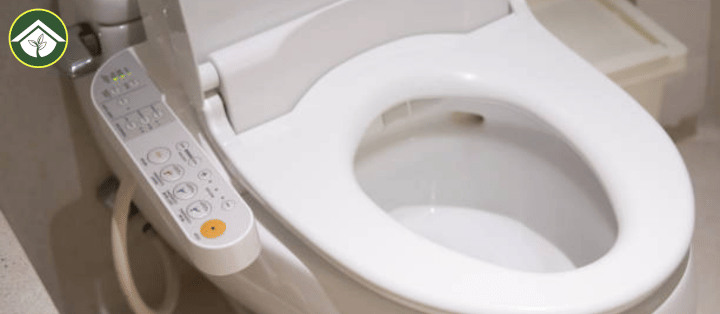
Stepping into a cold bathroom on a winter morning is one of those small daily ordeals that nobody talks about enough. The shock of a freezing toilet seat can jolt you fully awake in the worst possible way. That is precisely why the heated toilet seat has moved from a luxury novelty to a practical, sought-after bathroom upgrade in homes across the world. Whether you live in a cold climate, care for an elderly family member, or simply want a more comfortable and hygienic bathroom experience, today’s heated seats offer far more than just warmth. From built-in night lights and bidet functions to energy-saving modes and slim designs suited for small bathrooms, this guide walks you through everything you need to know before you buy — and how to install one yourself.
What Is a Heated Toilet Seat and How Does It Work?
A heated toilet seat is an electric toilet seat that uses internal resistance coils or a low-voltage heating element embedded within the seat surface to generate and maintain warmth. Most models connect to a standard electrical outlet — ideally a GFCI (Ground Fault Circuit Interrupter) outlet, which is required by the National Electrical Code (NEC) for all bathroom electrical installations.
The built-in thermostat regulates the temperature, and most quality models allow you to adjust the heat level across multiple settings. When you’re not using the toilet, many seats enter an eco or standby mode that reduces power draw significantly, helping you save on electricity without ever noticing a cold seat when you actually need it.
Key Types of Heated Toilet Seats:
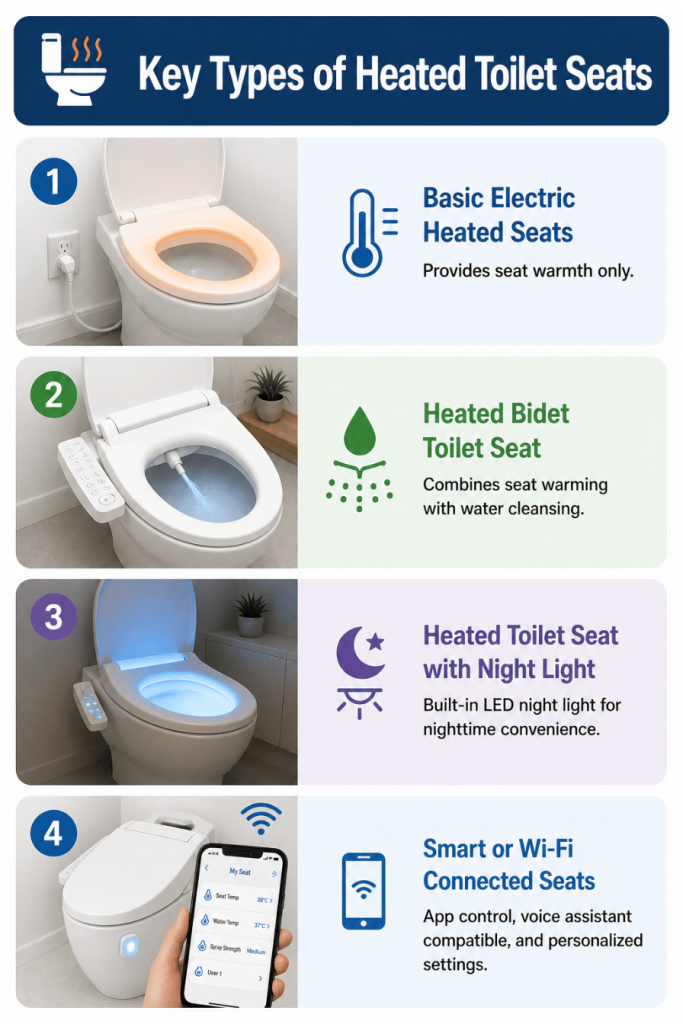
Basic Electric Heated Seats:
These are entry-level models that provide seat warmth only. They plug into a nearby outlet, offer two or three temperature settings, and are the easiest and most affordable option. They are ideal for anyone who simply wants to eliminate cold-seat shock without investing in advanced features.
Heated Bidet Toilet Seat:
A heated bidet toilet seat combines seat warming with water cleansing functions. These are the most feature-rich options on the market and are rapidly gaining popularity in North America after decades of widespread use in Japan and South Korea. According to Wikipedia’s overview of bidet technology, bidets have been a bathroom staple in much of Europe and Asia for generations, and the heated bidet seat brings that tradition into the modern era with electric controls, adjustable water temperature, and self-cleaning nozzles.
Heated Toilet Seat with Night Light:
Models with built-in LED night lights are particularly useful for nighttime bathroom visits. A soft ambient glow — often blue or warm white — means you do not need to switch on the main bathroom light, making these seats especially popular in homes with young children, light-sensitive sleepers, or elderly occupants.
Smart or Wi-Fi Connected Seats:
Premium smart seats can connect to your home Wi-Fi, be controlled via smartphone apps, respond to voice assistants such as Amazon Alexa or Google Assistant, and store personalized temperature and spray preferences for each family member.
Heated Toilet Seat for Cold Weather — Why It Matters More Than You Think:
If you live somewhere that experiences harsh winters, or if your bathroom sits over an unheated garage, on an exterior wall, or has tile flooring, a cold toilet seat is not just uncomfortable — it can be genuinely unpleasant enough to make people dread their own bathroom. A heated toilet seat solves this problem permanently.
The difference is immediately noticeable from the very first use, and users consistently report that it is one of those upgrades they cannot imagine going without. This is especially true for early risers and for anyone who gets up during the night. The warmth helps relax muscles too, which means the experience is more comfortable from start to finish — not just the moment of sitting down.
Heated Toilet Seat for Elderly and Mobility-Challenged Users:
Why Warmth Matters for Older Adults:
A heated toilet seat is genuinely beneficial for older adults and people living with conditions such as arthritis, fibromyalgia, or chronic joint pain. Heat is a well-established comfort measure for arthritic joints, and a warm seat reduces the physical shock and discomfort that can accompany sitting down and standing up on a cold surface. The Arthritis Foundation notes that heat therapy can ease stiffness and improve comfort for people with joint conditions.
Added Accessibility Features:
Many heated seats designed with elderly users in mind include large, easy-to-read control panels, raised seat heights, soft-close lids that prevent slamming, and night lights for safe navigation. Some models are also ADA-compliant, ensuring they meet accessibility standards for users with physical disabilities.
Adjustable Heated Toilet Seat Temperature — Understanding Your Settings:
Most heated toilet seats offer between two and five temperature levels, typically ranging from around 90°F to 104°F (32°C to 40°C). The ideal setting for most users falls somewhere in the comfortable mid-range — warm enough to feel pleasant without being too hot for sensitive skin.
What to Look For:
PID Temperature Control:
Higher-end models use Proportional-Integral-Derivative (PID) control technology, which maintains a precise, consistent temperature rather than cycling on and off. This means no surprise hot or cold spots as you sit.
Memory Settings:
Some seats allow multiple users to store their preferred temperature settings independently — a practical feature for households where different family members have different comfort levels.
Eco and Auto Modes:
Eco modes reduce power draw when the toilet is not in use. Some seats use occupancy sensors or timers to only activate full warmth when someone is nearby or seated, helping keep running costs minimal.
Energy-Efficient Heated Toilet Seat — What It Really Costs to Run:
One of the most common concerns about heated toilet seats is electricity cost. The good news is that these seats are remarkably energy-efficient. Most models consume between 50 and 100 watts of power — roughly comparable to a standard incandescent light bulb. According to the U.S. Department of Energy’s appliance energy guide, running a 50-watt device for a few hours daily costs only a small fraction of your monthly electricity bill.
On average, expect to spend around $2 to $4 per month in electricity to power a heated toilet seat, depending on usage and your local energy rate. Some ultra-efficient models with low-voltage DC power supplies consume less than 0.5 kWh per day even when running at full capacity all day. Many modern seats also feature:
- Automatic shut-off timers after periods of inactivity
- Eco standby modes that maintain minimum warmth at reduced power
- Instant-heat technology that eliminates the need for constant standby heating
Heated Toilet Seat Round vs Elongated — Choosing the Right Shape:
Understanding Toilet Bowl Shapes:
Before purchasing any heated toilet seat, you must determine whether your toilet bowl is round or elongated. This is one of the most important buying decisions and a leading cause of returns.
Round Toilet Seats:
Round bowls measure approximately 16.5 inches from the bolt holes to the front edge. They are more common in older homes and smaller bathrooms due to their compact footprint.
Elongated Toilet Seats:
Elongated bowls measure approximately 18.5 inches from bolt holes to front edge and are the standard in most modern homes. They provide a larger sitting surface and are generally considered more comfortable by adults.
The American National Standards Institute (ANSI) sets the standard dimensions for toilet bowls and seats, and most manufacturers follow these specifications. Always measure your existing toilet bowl before ordering to avoid compatibility issues.
Slim Heated Toilet Seat for Small Bathrooms:
If you have a compact bathroom or a toilet tucked close to a wall or vanity cabinet, seat thickness and profile matter. Standard heated bidet seats are often bulkier than regular seats due to the internal components they carry. However, many manufacturers now offer slim-profile models specifically designed for tight bathroom spaces.
These slim seats maintain all the core heating functions while reducing the overall depth and height, making them practical for bathrooms where space is at a premium. Look for seats specifically marketed as “slim fit” or “low-profile” and check the manufacturer’s dimension specifications before buying.
Quick-Heating Toilet Seat Technology — Instant Warm vs Tank Warm:
There are two main heating system technologies used in heated bidet toilet seats:
Reservoir (Tank) Heating:
The seat maintains a small reservoir of pre-warmed water. This means warm water is always ready instantly, but the reservoir consumes a small amount of standby energy to keep the water warm between uses.
Instant (Tankless) Heating:
The seat heats water on demand as you use it, similar to a tankless water heater. This eliminates standby energy consumption but may take a second or two to reach full temperature. Instant-heat systems are considered more energy-efficient and are increasingly common in modern quick-heating toilet seats.
Heated Toilet Seat Easy Installation — A Step-by-Step Overview:
One of the biggest selling points of heated toilet seats is how straightforward the installation process is. Most homeowners can complete the job in under 30 minutes without any professional help.
What You Will Need:
- A screwdriver (usually a flat-head or Phillips)
- Adjustable wrench
- Plumber’s tape (for bidet models with water connections)
- A nearby GFCI electrical outlet
Basic Installation Steps:
Step 1 — Remove the old seat: Locate the plastic bolt covers at the back of the toilet rim, unscrew the mounting bolts, and lift the old seat off. Clean the rim and bolt holes thoroughly.
Step 2 — Attach the mounting bracket: For bidet-style heated seats, slide the mounting bracket into position over the bolt holes and tighten with the included hardware.
Step 3 — Connect the water supply (bidet models only): Turn off the toilet’s water supply valve. Disconnect the supply hose from the tank, attach the included T-valve to the tank inlet, reconnect the supply hose to the T-valve, and attach the bidet’s supply hose to the open port. Use plumber’s tape on threaded connections to prevent leaks.
Step 4 — Seat the unit: Slide the heated seat onto the mounting bracket until it clicks securely into place.
Step 5 — Plug in and test: Plug the power cord into the GFCI outlet. Turn the water supply back on, check all connections for leaks, and test all seat functions — temperature settings, spray functions (if applicable), and night light.
For detailed electrical safety guidance on bathroom outlets, refer to the U.S. Consumer Product Safety Commission’s GFCI guide.
Frequently Asked Questions:
What is a heated toilet seat and how does it work?
A heated toilet seat is an electrically powered toilet seat that uses internal resistance coils or a low-voltage heating element to warm the seat surface. It connects to a standard GFCI outlet, and a built-in thermostat regulates the temperature. Most models allow you to choose between two and five warmth levels and include eco modes to reduce power consumption when the toilet is not in use.
Is a heated toilet seat safe to use in a bathroom?
Yes, heated toilet seats are safe when properly installed and plugged into a GFCI outlet, which cuts power immediately if a fault is detected. Quality models include multiple safety layers such as thermal fuses, anti-overheat sensors, IPX4 waterproof ratings, and auto shut-off functions. You should never use an extension cord in place of a properly installed bathroom outlet.
How much electricity does a heated toilet seat use?
Most heated toilet seats consume between 50 and 100 watts — similar to a standard light bulb. The average running cost is approximately $2 to $4 per month. Many energy-efficient models with eco modes or instant-heat technology use significantly less, with some ultra-low-power seats consuming under 0.5 kWh per day even when running continuously.
Can I install a heated toilet seat myself without a plumber?
Yes. Most heated-only seats require only a screwdriver and a nearby electrical outlet. Heated bidet toilet seats also require a simple T-valve water connection that the average homeowner can complete without plumbing experience. The full installation typically takes under 30 minutes. If your bathroom lacks a GFCI outlet near the toilet, you will need an electrician to install one before proceeding.
What is the difference between a heated toilet seat and a heated bidet toilet seat?
A standard heated toilet seat provides only seat warmth. A heated bidet toilet seat adds warm water cleansing, adjustable spray settings, self-cleaning nozzles, and often a warm air dryer, deodorizer, and night light. Bidet seats are more expensive but offer a significantly more complete hygiene experience.
Are heated toilet seats good for elderly people?
Heated toilet seats are particularly well-suited for elderly users. The warmth eases arthritic joint discomfort, reduces cold-shock during nighttime use, and many models include accessibility features such as large control panels, raised seating heights, ADA-compliant dimensions, soft-close lids, and built-in night lights for safer navigation in the dark.
Do heated toilet seats come in both round and elongated sizes?
Yes. Heated toilet seats are available in both round and elongated configurations to fit the two standard toilet bowl shapes. You must measure your toilet bowl before purchasing — round bowls are approximately 16.5 inches from bolt holes to front edge, while elongated bowls are approximately 18.5 inches. An elongated seat will not fit a round bowl, so always verify compatibility first.
How quickly does a heated toilet seat warm up?
This depends on the technology used. Tank-style seats maintain a pre-warmed state and feel warm immediately upon sitting. Instant-heat (tankless) models warm up within seconds of detecting use. Seats in eco or standby mode may take one to two minutes to reach the full set temperature. Quick-heating technology has improved significantly in recent models and most modern heated seats reach a comfortable temperature very rapidly.
Can I turn off the heating function during summer?
Yes. All quality heated toilet seats allow you to turn the heating element off entirely, or simply set it to the lowest temperature. Many models let you disable the heat function directly from the side control panel or remote, while keeping other features like the bidet or night light active. This makes them practical year-round rather than just in cold weather.
What features should I look for in a heated toilet seat with a night light?
Look for models with adjustable night light brightness, auto light-sensing (which activates the light only in darkness), and a color or tone that is gentle enough not to disturb sleep. The best heated toilet seat with night light models use soft LED illumination — typically blue or warm amber — that is bright enough to guide safely without switching on the main bathroom light.
Is a slim heated toilet seat as functional as a standard one?
Yes. Slim heated toilet seats contain the same core heating components as standard models but are engineered with a lower profile and more compact housing. They are specifically designed for bathrooms where the toilet is close to a wall, vanity, or cabinet. Functionality is not compromised — look for slim models that still offer multiple heat levels, soft-close lids, and, if desired, bidet capabilities.
How do I clean and maintain a heated toilet seat?
Clean the seat surface with a soft cloth and mild bathroom cleaner — avoid abrasive scrubbers or harsh chemical solvents that can damage the seat material or internal components. For bidet seats, the self-cleaning nozzle function handles internal hygiene automatically. Wipe the seam between the seat and the mounting bracket regularly, as this area can accumulate residue. Disconnect power before any deep cleaning.
How long does a heated toilet seat last?
A quality heated toilet seat typically lasts between 5 and 10 years with normal use and proper care. Premium brands often provide warranties of 1 to 3 years covering manufacturing defects and heating element failure. Longevity depends on build quality, usage frequency, and whether the seat is kept clean and protected from harsh cleaning products.
Are heated toilet seats compatible with all toilets?
Most heated toilet seats are designed to fit standard residential toilets in round or elongated configurations. However, some non-standard toilet shapes — such as French curve bowls, D-shaped bowls, or compact comfort-height models — may require specific seat sizing. Always check the manufacturer’s compatibility guide and measure your toilet’s bolt hole spacing (standard is 5.5 inches center-to-center) and bowl length before purchasing.
What is the best heated toilet seat for a small bathroom?
For compact bathrooms, prioritize a slim-profile model with a compact front clearance dimension. Check that the seat does not extend beyond the front rim of the bowl and that the side control panel or remote does not require significant side clearance. Many manufacturers now list the seat’s total installed dimensions alongside standard bowl-fit measurements, making it easier to verify fit before buying.


Leave a Reply