Your toilet seat is one of the most frequently touched and sat-upon surfaces in the entire home — yet it is also one of the most commonly under-cleaned. Even when it looks spotless, research published in the National Institutes of Health’s PubMed Central database confirms that bacteria including E. coli, Staphylococcus, and even Salmonella can persist on toilet surfaces between cleaning sessions, especially in high-traffic or shared bathrooms. Learning exactly how to clean a toilet seat — not just wipe it with whatever is closest — is the difference between a genuinely hygienic bathroom and one that merely looks clean. This guide covers every method you need: from a quick daily disinfect to a proper deep clean, from natural solutions using everyday kitchen staples to targeted treatments for stubborn yellow stains. Whether you want to know how to disinfect a toilet seat safely, how to remove yellow stains from a toilet seat that seem permanent, or just the easiest toilet seat cleaning hack that actually works, you will find it all here.
Why Regular Toilet Seat Cleaning Is Non-Negotiable for Bathroom Hygiene:
Toilet seats sit in a uniquely germ-heavy environment. When a toilet is flushed without a lid, it creates a “toilet plume” — tiny droplets released into the air that can contain bacteria and viruses from the bowl and travel up to two metres. Those droplets settle on nearby surfaces, including the top and underside of the seat. Over time, a combination of urine splashes, skin contact, moisture, and airborne particles from flushing creates a layered build-up of bacteria, grime, and mineral deposits that routine wiping alone will not address.
Toilet seats can carry bacteria, but because they are smooth and cleaned often they do not tend to hold onto germs as easily as other surfaces. This is actually good news — it means consistent, correct cleaning is highly effective at keeping the risk low. The key word is consistent. Sporadic cleaning allows mineral deposits, urine residue, and bacteria to embed themselves into the seat surface over time, making stains progressively harder to remove and creating persistent odour.
Supplies You Need Before You Start Cleaning:
Before you begin, gather all the necessary supplies to ensure the process is quick and efficient: a disinfectant cleaner or a mild antibacterial soap, disposable gloves, paper towels or a clean microfiber cloth, a toilet brush, and a soft sponge or non-abrasive scrubber. You will also benefit from having:
White vinegar — a natural disinfectant and mineral-deposit remover
Baking soda — a mild abrasive safe for plastic and ceramic surfaces
An old toothbrush — essential for cleaning hinge crevices and joints
Cotton swabs — for tight corners under hinge covers
Hydrogen peroxide (3%) — for mould, mildew, and rust stains
Rubber or disposable gloves — always wear these; even visually clean toilet seats carry germs and cleaning agents can irritate skin
How to Clean a Toilet Seat — The Complete Step-by-Step Method:
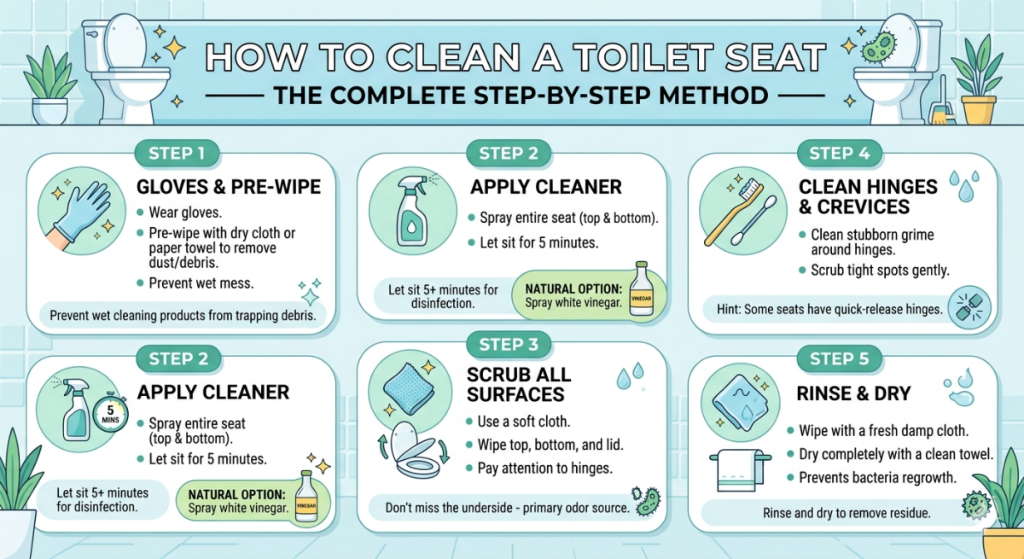
Step 1 — Put on Gloves and Pre-Wipe the Surface:
Always start by putting on rubber or disposable gloves. Use a dry paper towel or disinfectant wipe to remove any loose dust, hair, or debris from the top and underside of the seat and around the hinges. This initial pre-wipe prevents wet cleaning products from trapping dry debris on the surface.
Step 2 — Apply Your Cleaner to the Entire Seat:
Spray a disinfecting toilet cleaner or a mild bathroom cleaner on the entire seat — both top and underside. Let the solution sit for at least 5 minutes to break down germs, bacteria, and stains. This dwell time is essential for effective disinfection.
For a natural option, spray undiluted white vinegar generously across both surfaces. Vinegar’s acidity makes it an effective natural disinfectant against common household bacteria and helps dissolve hard water mineral deposits without harsh chemical fumes.
Step 3 — Scrub Every Surface Including the Underside:
After the cleaner has sat, use a soft microfiber cloth, disposable paper towels, or a non-abrasive sponge to wipe every part of the toilet seat. Start from the top surface, move underneath the seat, and pay special attention to the hinges where grime often builds up. If your toilet seat has a lid, clean both sides.
The underside of the seat is the area most people miss — yet it is where urine splashes accumulate most heavily, making it a primary source of bathroom odour.
Step 4 — Clean the Hinges and Hard-to-Reach Areas:
For stubborn grime or buildup around the hinges, use a cotton swab or an old toothbrush dipped in disinfectant. Scrub gently to loosen and remove dirt from tight spots, small crevices, or under decorative covers. This area is often overlooked but can harbour germs and bad odours if left uncleaned.
Many modern toilet seats have quick-release hinges that allow the entire seat to be unclipped from the bowl for cleaning. If yours has this feature, use it — it makes thorough cleaning significantly easier.
Step 5 — Rinse and Dry Thoroughly:
Wipe all cleaned surfaces with a fresh damp cloth to remove any cleaning product residue, then dry completely with a clean dry cloth or paper towels. Leaving moisture on the seat surface encourages bacterial regrowth and can cause water spots and accelerated staining.
How to Disinfect a Toilet Seat Properly — Not Just Clean It:
Cleaning and disinfecting are two different actions. Cleaning removes visible dirt and debris. Disinfecting kills the bacteria and viruses that remain on the surface after cleaning. For genuine disinfection, a product must remain on the surface long enough to work — this is called dwell time or contact time.
Most disinfectants require a contact time of at least 2 to 10 minutes to effectively kill bacteria, viruses, and mould spores. Do not rush this step — letting the cleaner sit maximises its effectiveness and reduces the need for heavy scrubbing later.
For those who prefer to avoid synthetic chemicals, white vinegar qualifies as a natural disinfectant for common household bacteria, though it is not a registered clinical disinfectant for all pathogen types. For households where someone is immunocompromised or ill, a product with a verified kill claim — such as those meeting EPA-registered disinfectant standards — is the more reliable choice.
Natural Ways to Clean a Toilet Seat Without Harsh Chemicals:
Baking Soda and White Vinegar — The Classic Combination:
Mix baking soda with a little water to form a thick paste. Apply it directly to the stained areas, leave it for about 15 minutes, then scrub with a soft sponge. This method is great for lifting surface-level stains without scratching. White vinegar is a powerful natural disinfectant — spray it generously over the stained areas, let it sit for 10 minutes, then wipe clean.
When baking soda and vinegar are combined, the fizzing reaction produces carbonic acid, which actively works against mineral deposits and light organic stains. This combination is particularly effective for general yellowing, light hard-water marks, and mild urine residue.
Lemon Juice for Light Discolouration and Fresh Scent:
Apply lemon juice with a soft cloth and gently rub over stains. It is especially effective on light discolouration and works even better when combined with sunlight. Lemon juice’s citric acid content targets mineral deposits and mild staining while leaving a genuinely fresh, natural scent — no synthetic fragrance required.
Hydrogen Peroxide for Mould, Mildew, and Rust:
Hydrogen peroxide is a versatile cleaning agent. Apply a small amount directly to the stains on the toilet seat, let it sit for 10–15 minutes, and then wipe it clean with a damp cloth. It is perfect for tough stains like mould, mildew, and rust, and eliminates the need to use harsh chemicals that might otherwise ruin your toilet seat.
How to Remove Yellow Stains from a Toilet Seat — Targeted Treatments:
Yellow staining is the most common complaint about toilet seats and one of the most frustrating to deal with. The primary causes of yellow stains are: minerals like calcium and magnesium in hard water that leave residue over time; urine splashes that, when left uncleaned, oxidise and create yellowish marks; improper cleaning products that damage the protective finish; and ageing plastic that discolours due to UV exposure or wear and tear.
For Light to Moderate Yellow Stains — Baking Soda Paste:
Make a paste by mixing 3 tablespoons of baking soda with a small amount of water. Spread it generously over the yellow-stained areas, then spray white vinegar over the baking soda paste. Allow the fizzing reaction to work for 10–15 minutes, then scrub with a soft sponge in circular motions and rinse thoroughly.
For Deep or Set-In Yellow Stains — Diluted Bleach Solution:
Dilute bleach in water — 1 part bleach to 10 parts water — and apply it to the stained areas with a cloth or sponge. Allow it to sit for 5–10 minutes. This works well on stubborn yellow stains and helps to disinfect heavily stained toilet seats. Use bleach cautiously: it can discolour or degrade some plastic seat materials, and must always be used with ventilation and gloves. Never mix bleach with vinegar, as this produces toxic chlorine gas.
For Plastic Seats with UV Discolouration:
When dealing with discoloured plastic toilet seats, use only non-abrasive cleaners specifically designed for plastic surfaces. Never use bleach as it can worsen discolouration. Instead, try a simple mixture of vinegar and water, or use a magic eraser for particularly stubborn spots.
How to Deep Clean a Toilet Seat — Monthly Maintenance Routine:
A deep clean goes beyond regular weekly wiping. Ideally performed monthly, it involves removing the seat entirely (where possible), cleaning all mounting hardware and hinge recesses, and treating any embedded staining.
Monthly deep cleaning should include: checking under hinges, tackling stains, and inspecting for cracks or lingering smells. If scrubbing does not remove stains, odours linger, or you spot a crack or warped area, it is time to replace the seat.
For a thorough deep clean, remove the seat using the quick-release mechanism (if available), or by unscrewing the hinge bolts. Soak the seat in a basin of warm water with a cup of white vinegar for 20–30 minutes, then scrub all surfaces with a soft brush, paying attention to the hinge pivot points and the inner rim. Rinse, dry, and reattach.
Easy Toilet Seat Cleaning Hacks That Actually Work:
The overnight vinegar soak hack: Pour undiluted white vinegar into a spray bottle and saturate the entire seat before bed. Leave overnight — by morning, mineral deposits and light stains will wipe away with almost no scrubbing.
The baking soda deodoriser hack: After cleaning, sprinkle a light dusting of dry baking soda on the seat surface and leave for 10 minutes before wiping away. This absorbs residual odours from the hinge area particularly effectively.
The toothbrush hack for hinges: Keep a dedicated old toothbrush in your cleaning supplies specifically for toilet seat hinges and bolt surrounds. A toothbrush reaches every crevice that cloths and sponges cannot.
The lid-down-before-flushing hack: Closing the lid before flushing minimises splashes and bacteria spread — reducing the amount of contamination that lands on the seat in the first place. This is perhaps the simplest preventive maintenance hack of all.
How Often Should You Clean a Toilet Seat:
For daily cleaning in high-traffic bathrooms, wipe and disinfect high-touch parts including the seat, lid, and flush handle. For private, low-use bathrooms, a full weekly clean of the entire seat is sufficient. Monthly, carry out a full deep clean including hinge removal and stain treatment. In shared households or homes with young children, more frequent cleaning — at minimum every two to three days — keeps bacteria levels consistently low and prevents staining from setting in.
Frequently Asked Questions
How do I disinfect a toilet seat properly without bleach?
The most effective bleach-free disinfection method is to apply a spray of white vinegar to all surfaces of the seat, allow it to sit for a minimum of 10 minutes for its acidic properties to act against bacteria, then wipe clean with a microfiber cloth. For a more powerful option, hydrogen peroxide at 3% concentration can be applied and left for 10–15 minutes before wiping. Products meeting the EPA’s registered disinfectant criteria that do not contain bleach — such as hydrogen peroxide-based bathroom sprays — are also widely available and effective.
What is the best natural way to clean a toilet seat?
The best all-round natural method combines baking soda and white vinegar. Apply a paste of baking soda mixed with water to the seat, spray white vinegar over it to trigger the fizzing reaction, leave for 15 minutes, then scrub with a soft sponge and rinse. This combination cleans, deodorises, and addresses light staining without any synthetic chemicals or harsh fumes, making it safe for households with children, pets, or chemical sensitivities.
Why does my toilet seat keep going yellow even after cleaning?
Yellowing has several causes. Hard water deposits from minerals like calcium and magnesium build up over time; urine splashes that are not cleaned promptly oxidise into yellowish marks; some abrasive cleaning products damage the protective surface coating, making the seat more prone to re-staining; and plastic naturally discolours from UV exposure and ageing. If yellowing persists despite regular cleaning, switching to a non-abrasive cleaner, installing a water softener to address hard water, and ensuring the seat is never exposed to direct sunlight will help. Severely discoloured seats that do not respond to treatment may simply need replacing.
Can I use bleach to clean a toilet seat?
Bleach can be used cautiously on some toilet seats for disinfection and heavy stain removal, but it is not the recommended first choice. Some people tend to use chlorine bleach on toilet seats because it is a strong disinfectant. However, due to the skin-on-skin contact associated with your toilet seat, you will want to use something that is safer, gentler, and specialised in removing tough stains. Bleach can also degrade plastic seat materials over time, cause discolouration, and must never be combined with vinegar or ammonia-based cleaners. If you choose to use it, dilute it to 1:10 with water, apply briefly, and rinse thoroughly.
How do I clean under the toilet seat hinges where dirt builds up?
This is the area most people miss but where bacteria and odour originate most frequently. Use a cotton swab or old toothbrush dipped in your chosen disinfectant cleaner and work it into the gap between the hinge and the toilet bowl rim. If your seat has quick-release hinges, unclip the seat entirely and clean both the hinge mechanism and the mounting area on the bowl rim directly. Regular cleaning of this area — at least once a week — prevents the thick grime build-up that becomes difficult to shift later.
Is it safe to mix baking soda and vinegar for cleaning a toilet seat?
Yes — this combination is safe and effective for toilet seat cleaning. The fizzing reaction between the two substances is the carbonic acid that helps lift stains and mineral deposits. Unlike mixing bleach with other products, baking soda and vinegar produce no toxic fumes and leave no harmful residue. Rinse the seat with clean water after use and dry thoroughly. This is one of the most widely recommended natural cleaning methods for bathroom surfaces.
How do I get rid of urine stains and smell from under the toilet seat?
Urine stains on the underside of the seat are best addressed with a mixture of hydrogen peroxide and baking soda, or with an enzyme-based bathroom cleaner. Enzyme cleaners are specifically formulated to break down the uric acid crystals that cause both the yellow staining and the persistent smell — standard surface cleaners often remove the visible stain without addressing the odour source. Apply the cleaner, leave for 10–15 minutes, scrub with a soft brush, and rinse. Preventing recurrence means cleaning the underside of the seat at every cleaning session, not just the top surface.
What cleaning products should I never use on a toilet seat?
Avoid abrasive scrubbing pads, steel wool, and powdered abrasive cleaners, as these scratch the seat surface, creating micro-grooves where bacteria embed and stains set more easily. Do not use abrasive cleaners or scrubbers on the toilet seat as they can scratch the surface and cause discoloration. Avoid mixing different cleaning chemicals — bleach with vinegar produces toxic chlorine gas, and bleach with ammonia produces chloramine vapour. Both are hazardous. The UK Health and Safety Executive and the CDC both caution against mixing household chemical cleaners.
How do I clean a wooden toilet seat without damaging it?
Wooden toilet seats require a gentler approach than plastic ones. Use a mild soap and warm water solution applied with a soft cloth — never soak a wooden seat or leave it wet. Avoid acidic cleaners like undiluted vinegar and never use bleach, as both can strip the sealant coating that protects the wood. After cleaning, dry immediately and thoroughly. For disinfection, a mild antibacterial soap provides sufficient protection for normal household use without the surface damage that stronger chemicals cause.
How do I remove black mould from a toilet seat?
Hydrogen peroxide applied directly to mould on a toilet seat, left for 10–15 minutes, and wiped clean is effective against mould, mildew, and associated staining. For stubborn mould growth particularly around hinge recesses, a diluted bleach solution (1:10) applied briefly, then rinsed thoroughly, provides a stronger kill. Address the underlying cause — typically moisture and inadequate ventilation — to prevent regrowth. The NHS guidance on damp and mould notes that improving bathroom ventilation is essential in preventing recurring mould in bathroom environments.
Can a dirty toilet seat make you sick?
Toilet seats can carry bacteria, but the risk of infection is low, especially if your skin is intact and you practise good hygiene. Most bacteria found on toilet seats are common and not harmful to healthy people. The greater transmission risk from toilet use comes from not washing hands thoroughly after use, and from the toilet plume produced by flushing without a closed lid. For immunocompromised individuals, pregnant women, or people with open skin injuries, more careful hygiene practices around toilet seats are advisable. The academic literature reviewed by NIH-published research on toilet hygiene confirms that regular cleaning significantly reduces pathogen load on toilet surfaces.
Should I clean the toilet seat every day?
In a shared household or a bathroom used by multiple people, daily wiping of the seat with a disinfectant wipe or antibacterial spray is a sound hygiene practice and takes under a minute. For high-traffic restrooms, wiping and disinfecting high-touch parts — including the seat, lid, and flush handle — should be done daily. For low-use private bathrooms, a full weekly clean is sufficient. A daily quick wipe prevents staining from building up and keeps bacterial counts low between thorough weekly cleans.
How do I remove hard water stains from a toilet seat?
Hard water stains are calcium and magnesium mineral deposits left behind when water evaporates. White vinegar is the most effective natural treatment: spray undiluted vinegar on the affected areas and leave for at least 15–20 minutes before scrubbing. For heavy build-up, a paste of lemon juice and baking soda applied for 20 minutes and scrubbed with a soft brush is highly effective. Thermoplastic or polypropylene toilet seats are more resistant to this type of staining and easier to clean — worth considering if hard water staining is a persistent issue in your home. Installing a water softener at the mains level will address the root cause.
When should I replace a toilet seat instead of continuing to clean it?
If a toilet seat is cracked, permanently stained, or the hinges no longer work well, it is time for a new one. Most toilet seats last 5–7 years. Additional replacement triggers include: visible warping of the seat that prevents it from sitting flush on the bowl, persistent odour that survives thorough cleaning (a sign that bacteria are embedded in micro-cracks in the surface), or discolouration so deep it cannot be removed by any cleaning method. Replacing an old seat is generally straightforward and covered in our companion guide on how to replace toilet seats.
What is the easiest cleaning hack for a consistently clean toilet seat?
The single most effective habit is closing the toilet lid before every flush. Flushing without a lid creates a toilet plume that releases droplets containing bacteria and viruses that can travel up to two metres and settle on nearby surfaces including the seat. Eliminating this source of contamination dramatically reduces how quickly the seat becomes dirty between cleans. Combine this with keeping disinfectant wipes within reach of the toilet for immediate clean-ups after any splashing, and you will find that your weekly cleaning session requires far less effort.
For further reading on household hygiene practices, the Wikipedia article on toilet hygiene provides a well-sourced overview of research in this area. The CDC’s guidance on hand hygiene is also essential reading for maintaining overall bathroom safety beyond just surface cleaning.


Leave a Reply