When disaster strikes, the power goes out, or you find yourself deep in the backcountry without a facility in sight, your sanitation options become a serious priority. A 5 gallon bucket toilet seat is one of the most practical, affordable, and battle-tested solutions ever devised for emergency preparedness, off-grid camping, and portable hygiene. For under $20 to $30, a standard plastic bucket and a snap-on toilet seat can replace a fully functional toilet in nearly any situation — from hurricane recovery to weekend wilderness trips. Whether you are building a DIY bucket toilet, assembling a complete camping 5 gallon bucket toilet kit, or simply looking for the right folding bucket toilet seat to toss in your go-bag, this guide covers everything you need to know about setup, seat types, odor control, waste disposal, and best practices for safe use.
Why a 5 Gallon Bucket Toilet Seat Belongs in Every Emergency Kit:
Natural disasters regularly disable sewage and septic systems. Floods, earthquakes, and extended power outages can render your home toilet completely unusable — not because the toilet itself is broken, but because the water supply or sewer line is compromised. According to Oregon State University Extension Service, emergency sanitation is as critical as food and water storage in any disaster preparedness plan.
The 5-gallon bucket has become the gold standard for emergency relief systems (ERS) because of its consistent size (approximately 12″ × 12″ × 16″), light weight, durability, and wide availability at any hardware or home improvement store. Pair it with a purpose-built portable toilet seat for 5 gallon bucket use, and you have a functional, dignified sanitation solution that can serve an entire household for days on end.
Beyond emergencies, the compact toilet seat for bucket use has become a staple among tent campers, hunters, RV travelers, boat owners, and anyone who spends extended time away from fixed plumbing facilities.
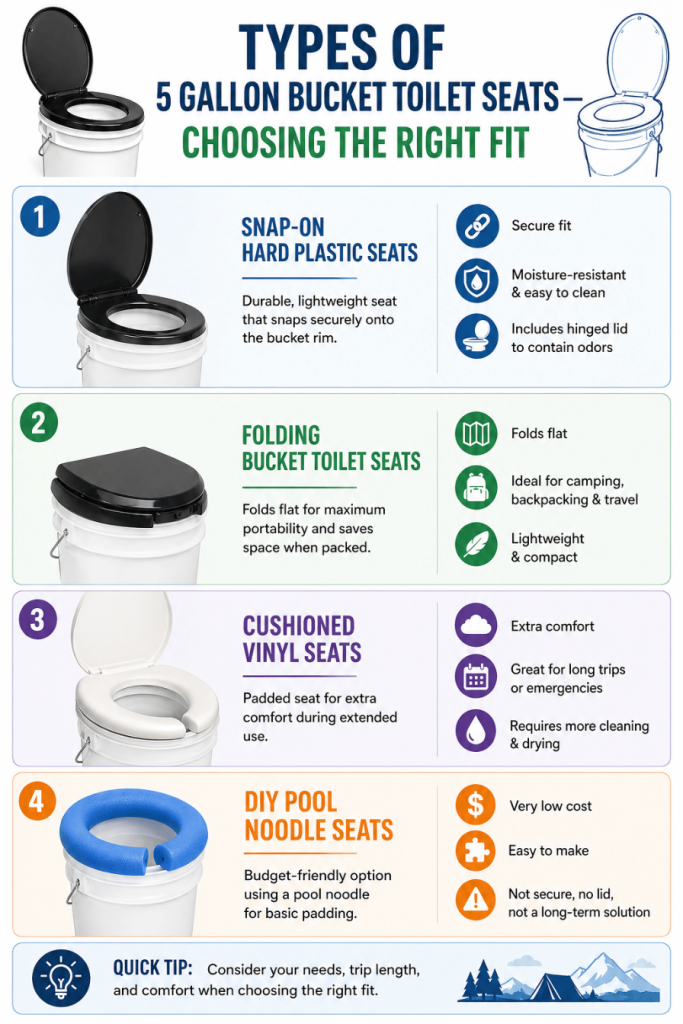
Types of 5 Gallon Bucket Toilet Seats — Choosing the Right Fit:
Snap-On Hard Plastic Seats:
The most common and widely available option is the snap-on molded plastic seat. These seats clip directly onto the rim of a standard 5-gallon bucket with a 12-inch diameter opening, creating a secure, stable fit that won’t shift during use. They typically weigh under one pound, making them ideal as part of a camping 5 gallon bucket toilet kit. Hard plastic seats are moisture-resistant, easy to wipe clean, and hold up well outdoors. Most include a hinged lid that closes over the seat to contain odors when the toilet is not in use.
Folding Bucket Toilet Seats:
A folding bucket toilet seat takes portability to the next level. Designed to collapse flat when not in use, these seats are the preferred choice for backpackers, ultralight campers, and anyone working with limited vehicle or pack space. While slightly less rigid than hard plastic snap-on models, quality folding seats are engineered to support adult body weight safely. Their low profile and compact footprint make them a superior option for bug-out bags and emergency kits where every cubic inch matters.
Cushioned Vinyl Seats:
For those who anticipate extended use — such as during multi-day camping trips or prolonged emergency scenarios — cushioned vinyl bucket toilet seats provide significantly more comfort than hard plastic. The foam padding distributes weight more evenly, reducing fatigue and discomfort. The tradeoff is that fabric materials can trap moisture and odors over time, requiring more frequent cleaning and drying.
DIY Pool Noodle Seats:
The budget-conscious DIY bucket toilet seat option involves slitting a pool noodle lengthwise and fitting it around the bucket rim. This improvised approach costs almost nothing if you already have a pool noodle on hand and provides adequate padding for short-term use. However, pool noodles do not lock onto the bucket, provide no lid for odor containment, and are not a long-term solution for a serious emergency relief system.
How to Build a DIY Bucket Toilet — Step-by-Step:
Materials You Will Need:
For a basic emergency 5 gallon bucket toilet, gather the following: a 5-gallon plastic bucket with a standard 12-inch rim diameter, a snap-on toilet seat or lid combo (available at outdoor retailers and online), heavy-duty contractor garbage bags (3–5 mil thickness), an absorbent material such as sawdust, peat moss, kitty litter, or shredded paper, disposable gloves, and a separate second bucket for a two-bucket system.
Assembly and Use:
Place a heavy-duty garbage bag inside the bucket, smoothing it against the walls. For extra leak protection, double-bag the liner. Add a generous layer — about two inches — of your chosen absorbent material at the bottom of the bag. This will immediately begin controlling moisture and suppressing odors. Snap the toilet seat firmly onto the bucket rim; a properly fitted seat should not wobble or slide. After each use, add another small scoop of absorbent material over the waste to manage odors and begin the breakdown process. When the bag is approaching capacity, tie it securely closed, remove it, and store it in a sealed outdoor container for later disposal.
The Two-Bucket System:
Sanitation experts at Oregon State University Extension and emergency preparedness specialists consistently recommend using two separate buckets — one clearly labeled for urine and one for solid waste. Keeping them separate dramatically reduces odor, makes the contents easier and less unpleasant to handle during disposal, and extends how long each bag can remain in use before needing to be changed.
Odor Control Strategies for Your Emergency 5 Gallon Bucket Toilet:
Odor management is the biggest concern for most first-time users of a bucket toilet system, and the good news is that it is very manageable with the right materials. The most effective approach is consistent use of a carbon-based absorbent material after every single use. Sawdust, peat moss, bark chips, spent coffee grounds, and non-clumping cat litter all work well. According to Loma Linda University Health’s emergency sanitation guidelines, a diluted bleach solution (1:10 bleach-to-water ratio) or powdered chlorinated lime can be used as a disinfectant in the bucket to further suppress odors and pathogens.
Always keep the lid closed when the toilet is not in use. A few drops of essential oil added to the absorbent material can provide an additional layer of fragrance control. Sanitize the bucket itself with disinfectant at least once a week during extended use, as certain plastic materials can absorb and retain odors even after the liner is changed.
Waste Disposal: Rules, Safety, and Best Practices:
At Home During an Emergency:
According to Loma Linda University Health, human waste should not be disposed of with regular trash independently. Place all sealed waste bags inside a larger, heavy-duty trash bag or a designated waste bin with a secure lid. Keep this container outside, away from living areas, until municipal waste collection services resume and provide guidance for proper disposal. Never pour raw waste into drains, storm drains, or onto soil near water sources.
While Camping:
Always follow Leave No Trace principles when disposing of waste in the outdoors. In many wilderness and high-traffic areas, packing out all human waste is legally required. Use commercially available WAG bags (Waste Alleviation and Gelling bags), which contain a NASA-developed absorbent powder that solidifies liquid and neutralizes odor, allowing the entire sealed bag to be disposed of in a regular trash receptacle. Check with local land management agencies — such as the U.S. Forest Service or Bureau of Land Management — for regulations specific to your camping area before your trip.
Key Features to Look for When Buying a Portable Toilet Seat for 5 Gallon Bucket Use:
When selecting a commercial compact toilet seat for bucket use, keep these factors in mind. First, confirm the seat is designed to fit a 12-inch diameter rim, which is the standard for most 5-gallon buckets sold at hardware stores. Second, check the weight capacity — quality seats support between 200 and 350 pounds, which covers the vast majority of adult users. Third, assess the lid design: a secure, hinged lid that closes flush with the seat base is essential for odor containment. Fourth, consider the material — UV-resistant polypropylene is preferable for outdoor use, as it resists fading, cracking, and discoloration. Finally, look for seats with hook holes or integrated carry handles, which simplify storage and transport.
Frequently Asked Questions:
What is a 5 gallon bucket toilet seat?
A 5 gallon bucket toilet seat is a specially designed lid and seat combination that snaps securely onto the rim of a standard 5-gallon plastic bucket, converting it into a functional portable toilet. These seats typically include a hinged lid for odor control and are used in camping, emergency preparedness, hunting, boating, and off-grid living situations.
What size bucket does a bucket toilet seat fit?
Most commercially available bucket toilet seats are designed to fit buckets with a 12-inch diameter rim, which is the standard size for virtually all 5-gallon buckets sold at hardware and home improvement stores. Some seats also fit 3.5-gallon and 4-gallon buckets with similar rim dimensions, but always verify the diameter before purchasing.
How much weight can a 5 gallon bucket toilet support?
The bucket itself, when made of high-density polyethylene (HDPE), can typically support well over 300 pounds of static load. Commercial snap-on toilet seats are generally rated between 200 and 350 pounds. Some products, such as the Reliance Luggable Loo, have been reported by users to comfortably support individuals up to 350 pounds.
What is the best absorbent material to use in a bucket toilet?
Sawdust, peat moss, non-clumping cat litter, bark chips, and shredded paper are all effective. Sawdust and peat moss are widely considered the top choices because they control odor efficiently and — when used without a plastic liner — are compostable in a properly managed humanure system. Avoid clumping cat litter, as it can cause the contents to solidify into a difficult-to-remove mass.
How do you control odors in a camping 5 gallon bucket toilet kit?
Consistent application of an absorbent carbon material after every use is the most important step. Keeping the lid closed at all times when the toilet is not in use prevents odor from escaping. Using heavy-duty 3–5 mil contractor bags as liners, double-bagging for extra security, and cleaning the bucket itself regularly with a diluted bleach solution all contribute to a significantly more odor-free experience.
Can you use a regular toilet seat on a 5 gallon bucket?
A standard household toilet seat is not recommended for direct use on a 5-gallon bucket because the mounting hardware is designed for a toilet bowl, not a bucket rim. However, some DIY setups attach a regular toilet seat to a plywood board cut to fit over the bucket, which is then secured with bungee cords or brackets. A seat purpose-built for bucket use provides a more stable, safer, and simpler solution.
How do you properly dispose of waste from a bucket toilet?
For emergency home use, seal all waste bags and store them in a heavy-duty trash container with a lid, kept outdoors. Wait for municipal guidance on waste collection after a disaster. For camping, use WAG bags designed for landfill disposal, or follow all applicable land management regulations for your area. Never dump raw waste near water sources, into storm drains, or onto open ground in populated areas.
What is a folding bucket toilet seat, and is it worth buying?
A folding bucket toilet seat is a collapsible version of a standard snap-on seat that folds flat for compact storage. It is particularly valuable for backpackers, road trippers, and anyone packing light. Quality folding seats support adult body weight reliably despite their reduced profile and are worth the investment for anyone who prioritizes portability over the slight added rigidity of a hard-shell model.
How often should you empty and clean a 5 gallon bucket toilet?
In high-use situations, the liner bag should be changed at least every one to two days to prevent the bucket from becoming too heavy to safely lift and to minimize odor buildup. The bucket itself should be sanitized at least once per week during extended use. Some plastic materials absorb odors over time, so regular disinfection — using a 1:10 bleach-to-water solution — is important for maintaining hygiene.
Is it legal to use a bucket toilet while camping?
Legality depends entirely on the jurisdiction and specific land you are camping on. In designated campgrounds, bucket toilet systems are generally acceptable as long as waste is properly packed out or disposed of at approved dump stations. In wilderness areas managed by the U.S. Forest Service, Bureau of Land Management, or National Park Service, many locations require that all human waste be packed out using approved WAG bags. Always check with the relevant land management authority before your trip.
Can children use a 5 gallon bucket toilet safely?
Yes, with adult supervision. The seat height — approximately 12–16 inches off the ground — is lower than a standard toilet, which can actually make it easier for younger children to use. Adult oversight is recommended to ensure children sit squarely on the seat and to manage the absorbent material and liner bag hygienically after each use.
What are WAG bags, and can they be used with a bucket toilet seat?
WAG bags (Waste Alleviation and Gelling bags) are puncture-resistant, odor-suppressing bags that contain a NASA-developed gelling powder. They solidify liquid waste on contact and are approved for disposal in standard trash receptacles in most jurisdictions. They are fully compatible with 5-gallon bucket toilet seats and are the preferred waste management solution for wilderness and high-use outdoor areas where burying waste is discouraged or prohibited.
How do you keep a bucket toilet from tipping over during use?
Choose a stable, level surface for placement. Some users place a few heavy stones in the bottom of the bucket (beneath the liner bag) to lower the center of gravity. Avoid placing the toilet on soft or uneven ground. A wooden box enclosure — essentially a simple plywood frame built around the bucket — provides the most stable and comfortable setup, and is a popular DIY upgrade for longer-term use scenarios.
What is a urine-diverting toilet seat, and does it work on a 5 gallon bucket?
A urine-diverting toilet seat is a specially shaped seat that channels liquid waste into a separate container while solid waste falls into the bucket below. This dramatically reduces odor (most of the odor in a combined waste bucket comes from the chemical reaction between urine and feces), extends the life of each bag, and simplifies waste management. Urine-diverting seats compatible with 5-gallon buckets are available from specialty sanitation suppliers and are particularly popular in Scandinavia, where urine-diverting composting toilet systems are increasingly used for sustainable agriculture.
How does a 5 gallon bucket toilet compare to a commercial portable toilet?
A 5-gallon bucket toilet is dramatically less expensive ($15–$40 total) compared to a self-contained portable toilet ($80–$300+), lighter in weight, simpler to set up, and easier to store. Commercial portable toilets offer advantages including built-in flushing mechanisms, larger waste capacity, and a more home-like experience. For short-term emergencies, camping weekends, and budget-conscious users, the bucket toilet is the clear winner in cost-to-value ratio. For extended trips, frequent use, or comfort-prioritizing users, a commercial unit may justify the added expense.


Leave a Reply