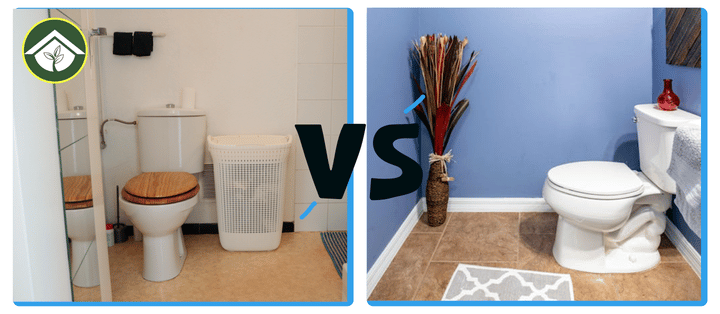
Replacing a toilet seat sounds simple until you are standing in the hardware store aisle staring at a wall of options and wondering whether wood or plastic is the smarter choice. This question comes up constantly among homeowners, renovators, and anyone updating a bathroom on any budget — and the answer is genuinely nuanced. The debate over wood vs plastic toilet seats touches on comfort, hygiene, moisture resistance, cost, lifespan, and the aesthetics of the room where you spend more time than you might admit. Neither material is universally superior. Each has a set of conditions under which it wins — and understanding those conditions is what allows you to choose the right seat for your specific bathroom, household, and cleaning habits. This guide breaks down every meaningful dimension of the comparison so that by the end, you know exactly what to buy and why.
Wood vs Plastic Toilet Seats — The Core Material Differences You Need to Know:
Before comparing them across specific criteria, it helps to understand what “wood” and “plastic” toilet seats actually mean in the modern market, because both categories contain significant variety.
What Modern Wood Toilet Seats Are Actually Made Of:
The term “wood toilet seat” encompasses several distinct constructions. Solid wood seats use real hardwood — typically oak or maple — sealed with varnish or lacquer. More common in today’s market are enameled wood seats, which use a compressed or MDF (medium-density fiberboard) core covered with multiple coats of high-gloss enamel paint. Quality enameled wood seats from established manufacturers receive three to seven coats of enamel, creating a hard, glossy, non-porous surface that looks and feels like ceramic. According to the U.S. Consumer Product Safety Commission’s general guidance on household product labeling, material composition disclosures matter for consumer safety — so checking manufacturer specs before buying any toilet seat is worth doing.
What Modern Plastic Toilet Seats Are Actually Made Of:
Plastic toilet seats come primarily in two grades: polypropylene (PP) for budget models and thermoset or Duroplast for premium options. Polypropylene seats are lightweight and injection-molded as a single piece, making them affordable and moisture-resistant. Thermoset or Duroplast plastic is a denser, harder compound with significantly better scratch and chemical resistance. The type of plastic matters considerably — a budget polypropylene seat and a premium thermoset seat behave very differently in terms of longevity and feel, even though both are technically “plastic.”
Durability and Lifespan — Which Toilet Seat Material Lasts Longer:
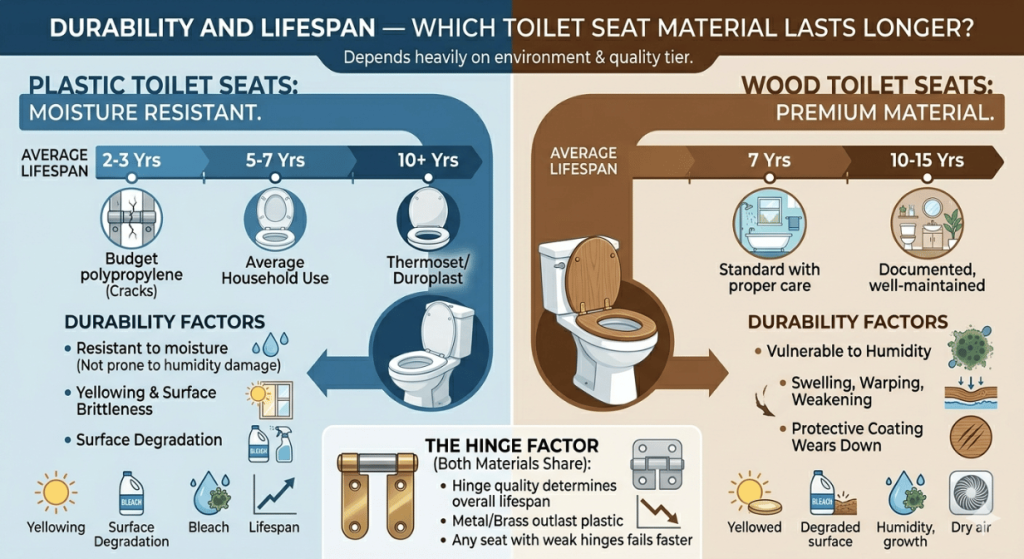
Durability is one of the most frequently debated points in the wood vs plastic toilet seat comparison, and the honest answer is that it depends heavily on environment and quality tier.
How Long Does a Plastic Toilet Seat Last?
Plastic toilet seats by design are resistant to moisture and not prone to chipping or cracking from humidity. Under normal household use, a plastic toilet seat can last from five to seven years on average. However, budget polypropylene seats can crack at stress points near the hinges within two to three years, while thermoset or Duroplast seats often last more than ten years. Exposure to direct sunlight through a bathroom window can cause yellowing and surface brittleness over time, and some harsh cleaning chemicals — particularly bleach used repeatedly — degrade the surface of cheaper plastic models.
How Long Does a Wood Toilet Seat Last?
Wood toilet seats can last over seven years with proper care in the right environment. A well-maintained wooden seat in a dry, well-ventilated bathroom has been documented to last 10 to 15 years. The critical variable is moisture. Untreated or poorly sealed wood is inherently vulnerable to the humidity endemic to bathrooms. When moisture penetrates, swelling, warping, mold growth, and structural weakening follow. The protective coating on wood seats also wears down over time — scratches during cleaning can breach the enamel, exposing the porous material underneath.
The Hinge Factor Both Materials Share:
Regardless of the seat material, hinge quality determines a significant portion of overall lifespan. Metal or brass hinges consistently outlast plastic hinges on both wood and plastic seats. Any toilet seat — wood or plastic — paired with weak plastic hinges will fail faster than its material alone would suggest.
Hygiene and Cleaning — Are Plastic Toilet Seats Easier to Clean Than Wood?
Hygiene is arguably the most practically important dimension of this comparison, particularly for family bathrooms.
The Non-Porous Advantage of Plastic:
Plastic toilet seats have a decisive hygiene advantage rooted in their non-porous surface. A sealed plastic surface does not absorb liquids, urine splatter, or bacteria. Studies referenced by the American Society of Sanitary Engineering indicate that smooth plastic surfaces can be sanitized to 99.9% bacterial reduction with standard bathroom cleaners. A quick wipe with a mild cleaning solution is genuinely all that is needed for routine maintenance. Plastic also tolerates a wider range of cleaning products without surface degradation, making it the practical choice for households that use disinfectants frequently, such as during toilet training with young children.
Wood Seats and Hygiene — The Coating Is Everything:
The hygiene performance of a wood toilet seat is almost entirely determined by the integrity of its surface coating. A properly sealed, intact enameled wood seat achieves approximately 98.5% bacterial reduction with standard cleaners — not dramatically different from plastic. The problem arises when that coating chips, cracks, or wears thin. Once the underlying porous material is exposed, bacteria, moisture, and odors penetrate the surface in ways that no amount of wiping can fully address. Harsh cleaning products — bleach, ammonia-based sprays, abrasive scrubbers — accelerate coating deterioration, making them particularly damaging on wood seats.
For family bathrooms with heavy use and frequent cleaning, plastic is the safer long-term hygiene choice. In lower-traffic or carefully maintained bathrooms, a quality enameled wood seat presents no meaningful hygiene disadvantage.
Comfort — Wood Toilet Seat Warmth vs Plastic Cold Surfaces:
Comfort is where wood genuinely wins over most plastic options, and it comes down to thermal conductivity.
Why Wood Feels Warmer:
Wood is a poor conductor of heat, which means it does not rapidly draw warmth away from the body on contact. In cold climates or simply during a midnight bathroom visit in winter, a wood toilet seat retains ambient warmth in a way that a plastic seat does not. Plastic, being a better thermal conductor, tends to feel noticeably colder to the touch, which is a real comfort complaint in colder households. The Wikipedia entry on thermal conductivity explains why materials with low thermal conductivity — like wood — feel warmer to the touch than those with higher conductivity.
Wood seats are also generally heavier, and that weight contributes to a sense of stability and quality that some users find more comfortable. Plastic seats, particularly cheaper polypropylene models, can flex slightly under load and feel less substantial.
The practical workaround for cold plastic seats is a heated toilet seat — though this adds cost and requires an electrical connection near the toilet.
Moisture Resistance — The Decisive Factor for Humid Bathrooms:
Moisture resistance is the single biggest material difference between wood and plastic toilet seats in real-world bathroom conditions.
Plastic’s Inherent Moisture Resistance:
Plastic does not absorb water. Whether it is steam from showers, splashing, or simply the persistent humidity of an enclosed bathroom, a plastic seat is structurally indifferent. This is why experts consistently recommend plastic for bathrooms with poor ventilation, small spaces, or homes in humid climates. There is no swelling, no warping, no mold growth initiated by the seat material itself.
Wood’s Vulnerability to Moisture and How to Manage It:
Untreated wood and even MDF-core seats with aging seals are susceptible to absorbing moisture, meaning they can crack or warp. If a wood toilet seat is properly sealed, there is less chance of this occurring — but that seal requires maintenance. Applying a thin coat of appropriate wood sealant every six to twelve months significantly extends the moisture resistance of a wood seat. The hinge attachment points are particularly vulnerable, as water can wick into the wood through screw holes if they are not adequately sealed.
In practical terms: wood seats in dry, well-ventilated bathrooms with a dedicated maintenance routine can perform excellently. Wood seats in steam-heavy, poorly ventilated bathrooms are a poor investment regardless of quality.
Cost Comparison — Wood vs Plastic Toilet Seat Pricing:
Price Range Overview:
Plastic toilet seats are consistently more affordable than comparable wood options. Basic polypropylene plastic seats begin around $15 to $25, while mid-range models with soft-close mechanisms and quick-release hinges typically fall between $30 and $60. Premium thermoset or Duroplast plastic seats can reach $80 to $150.
Wood toilet seats generally begin around $30 to $40 for basic models, with quality enameled wood seats from established brands falling between $50 and $120. Solid hardwood or designer wood seats can exceed $200. Budget wood seats — particularly particle board models priced under $20 — are a false economy, frequently showing peeling or structural failure within 18 months.
Lifecycle Cost Consideration:
A well-maintained enameled wood seat at $70 that lasts ten years represents a lower cost per year than a budget plastic seat at $20 that requires replacement every two to three years. When comparing wood vs plastic toilet seat value, price at purchase is only one part of the calculation.
Choosing Between Wood or Plastic Toilet Seat for a Family Bathroom:
Family bathrooms are high-traffic, frequently cleaned, and often home to young children — a combination that tends to favor plastic. Plastic’s non-porous surface tolerates harsh disinfectants used for potty training accidents, is lighter for children to lift and lower safely, and is simpler to replace affordably when damage occurs. For shared bathrooms used by multiple people across different age groups, plastic delivers consistent practical performance with minimal maintenance demands.
Wood seats find their best application in lower-traffic bathrooms — an en-suite or guest bathroom — where aesthetics matter, ventilation is adequate, and the household is willing to invest in periodic maintenance. A quality wood seat adds a warm, premium character to traditional or transitional bathroom styles that plastic rarely replicates convincingly.
Frequently Asked Questions:
What is the best material for a toilet seat — wood or plastic?
Neither material is universally best. Plastic is the better choice for hygiene, moisture resistance, and low maintenance. Wood is preferable for warmth, comfort, and aesthetic appeal in well-maintained, well-ventilated bathrooms. The right choice depends on your bathroom conditions, cleaning habits, and priorities.
Which lasts longer — a wood or plastic toilet seat?
With proper care, a quality enameled wood seat in a dry bathroom can last 10 to 15 years, potentially outlasting plastic. Plastic seats typically last 5 to 7 years under normal household conditions, though premium thermoset plastic seats can exceed a decade. The honest answer is that maintenance and environment matter more than material alone.
Are plastic toilet seats easier to clean than wood?
Yes, in most cases. Plastic’s non-porous surface resists bacteria, tolerates a wider range of cleaning products, and requires only a quick wipe-down for routine hygiene. Wood seats with intact enamel perform nearly as well, but degraded coatings on wood create hygiene challenges that plastic does not share.
Is a wood toilet seat more comfortable than plastic?
Generally, yes. Wood is a poor thermal conductor, so it feels warmer on contact — particularly noticeable in cold weather. Wood seats also tend to feel more substantial and stable. Plastic seats can feel cold and slightly flexible under load, though heated plastic seats eliminate the temperature complaint.
Do wood toilet seats warp in humid bathrooms?
Yes, if they are not properly sealed or maintained. Moisture is wood’s primary vulnerability in bathroom environments. In high-humidity bathrooms or those with poor ventilation, a plastic seat is the more reliable choice. If you prefer wood, a quality enameled seat with regular sealant maintenance significantly reduces warping risk.
How much does a wood toilet seat cost compared to plastic?
Plastic seats range from approximately $15 for basic models to $150 for premium options. Wood seats typically start around $30 to $40 and range up to $200 or more for designer or solid hardwood versions. Quality enameled wood seats from reputable manufacturers typically fall in the $50 to $120 range.
Can wood toilet seats get moldy?
Yes, if moisture penetrates the protective coating. Mold can develop in the porous material beneath a worn or chipped enamel finish. Proper sealing, gentle cleaning products, and adequate bathroom ventilation are the primary preventive measures. Plastic seats do not mold in the same way because they do not absorb moisture.
Which toilet seat material is better for households with young children?
Plastic is generally the better choice for households with young children. It tolerates harsh disinfectants used during toilet training, is lighter for small hands to manage, and is less expensive to replace if damaged. The CDC’s guidelines on household disinfection emphasize selecting surfaces compatible with regular disinfectant use — an argument that favors plastic in high-use family bathrooms.
Is an enameled wood toilet seat better than a regular plastic one?
An enameled wood seat sits in a middle ground: it has the weight and feel of wood with a surface that approaches plastic in terms of hygiene and moisture resistance. At comparable price points, a quality enameled wood seat from a reputable manufacturer can offer an appealing combination of aesthetics, warmth, and hygiene — though it still requires more maintenance than plastic over time.
Are wood toilet seats allowed in public restrooms?
In the United States, federal law requires that public restroom toilet seats have an open front (U-shaped design), as outlined by OSHA’s sanitation standards for workplace restrooms. Since all standard wood toilet seats are closed-front designs, they cannot legally be used in public restrooms in the U.S. Public facilities must use open-front plastic seats.
What type of plastic is best for a toilet seat?
Thermoset plastic (also called Duroplast) is the highest-performing plastic for toilet seats, offering superior scratch resistance, density, and longevity compared to standard polypropylene. Thermoset seats are harder, less prone to yellowing, and more resistant to chemical cleaners. For a family bathroom where quality matters, thermoset plastic is worth the premium over budget polypropylene.
How do I maintain a wood toilet seat to make it last longer?
Clean it with mild soap and water — avoid bleach, ammonia, or abrasive scrubbers, which degrade the enamel coating. Reseal it with an appropriate wood sealant every six to twelve months, paying particular attention to hinge attachment points where moisture wicks in most readily. Address any chips or scratches promptly with touch-up enamel paint to prevent moisture penetration. Ensure your bathroom has adequate ventilation to keep ambient humidity as low as possible. The Environmental Protection Agency’s Indoor Air Quality guidance offers useful context on managing bathroom moisture through ventilation.
Do soft-close hinges come on both wood and plastic toilet seats?
Soft-close hinges are now widely available on both wood and plastic toilet seats. Many modern wood seats use hydraulic or damped hinges to prevent slamming. This feature is worth prioritizing regardless of material — it reduces noise, prevents hinge wear from impact, and protects small fingers from getting caught under a falling lid.
Which toilet seat material is more eco-friendly?
Sustainably sourced wood, certified by organizations like the Forest Stewardship Council (FSC), is a renewable resource and has a lower environmental footprint than petroleum-based plastic when responsibly managed. However, wood seats that require frequent replacement due to moisture damage may ultimately generate more waste than a long-lasting thermoset plastic seat. If environmental impact matters in your purchase decision, look for FSC-certified wood seats or long-lasting thermoset plastic options rather than short-cycle budget seats in either material.
Can I replace a wood toilet seat with a plastic one, or vice versa?
Yes, in almost all cases. Toilet seats attach via standard bolt patterns, and both wood and plastic seats are manufactured in the same standard shapes — round and elongated — to fit the same range of toilet bowls. When replacing your toilet seat, the key measurements are the shape (round vs elongated), the distance between the hinge bolts, and the overall dimensions of your toilet bowl rim. These are consistent across materials, making switching between wood and plastic a straightforward swap that any homeowner can complete in under 30 minutes with basic tools.


Leave a Reply