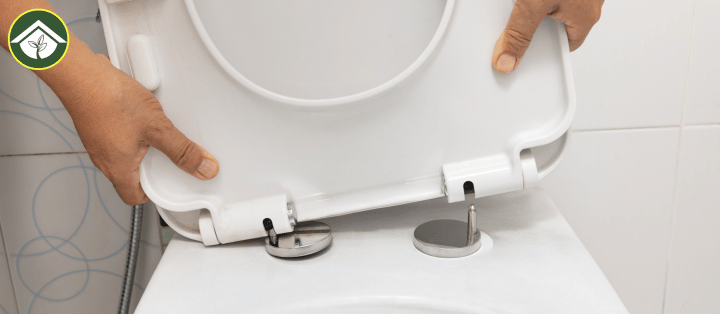
Few bathroom repairs are as straightforward — or as misunderstood — as working with toilet seat bolts. Whether your seat wobbles every time you sit down, your old hardware has corroded beyond recovery, or you are fitting a brand-new seat and want it done right the first time, understanding how toilet seat bolts work is the essential first step. The right toilet seat fixing kit, correctly installed, is all that stands between a solid, hygienic seat and one that shifts, leaks odors, or cracks your porcelain through overtightening. This guide walks through everything — bolt types, materials, sizing standards, step-by-step toilet seat installation, removal of stubborn or rusted bolts, and how to choose the best toilet seat mounting hardware for your specific toilet.
Why Toilet Seat Bolts Matter More Than You Think:
Most homeowners treat toilet seat bolts as afterthoughts — the tiny pieces of hardware buried at the back of the bowl that only get attention when something goes wrong. In reality, the quality and condition of your mounting hardware directly affects seat stability, hygiene, and longevity. Loose or corroded bolts cause the seat to shift laterally during use, creating micro-gaps between the hinge and the bowl that accumulate bacteria and urine residue — contributing to persistent odors that thorough cleaning alone cannot solve.
According to Wikipedia’s overview of toilet seat design and sanitation, toilet seat fixtures evolved through the twentieth century specifically to improve sanitation contact with porcelain surfaces — and hinge hardware stability has always been central to that goal. Choosing the right bolt material and fixing method is not just about convenience; it directly influences bathroom hygiene.
Toilet Seat Bolts — Types of Fixing Systems:
Bottom-Fix (Standard Under-Bowl) Bolts:
The bottom-fix system is the most traditional and widely used mounting method in older and mid-range toilets. The bolt drops through the hinge plate on the toilet seat, passes through a hole in the ceramic bowl, and is secured underneath the bowl rim by a nut and washer. The bolt head is typically concealed by a plastic cap that snaps over the hinge.
This system is easy to align, easy to adjust if the seat shifts after installation, and generally accessible without specialist tools. The main drawback is that the exposed nut and washer underneath the bowl rim sit in a persistently damp environment, making them vulnerable to corrosion over time — especially if the hardware is made from plain steel rather than stainless, brass, or high-density nylon.
Top-Fix (Top-Tightening) Bolts:
Top-fix toilet seat mounting hardware is designed for modern, concealed-cistern toilets where there is no practical access underneath the bowl rim. Instead of passing through to a nut below, the bolt drops into the mounting hole from above and is tightened internally using an expanding rubber or plastic anchor mechanism that grips the inside of the hole. All tightening is done from above, using a screwdriver, without any under-bowl access required.
Top-fix systems are increasingly common in new bathroom installations across the UK, Europe, and in compact American bathrooms. As noted in Cush’n Soft’s guide to toilet seat hinges, these two systems are not interchangeable — a toilet designed for top-fix bolts cannot accept bottom-fix hardware, and vice versa. Always identify your toilet’s fixing type before purchasing a replacement toilet seat fixing kit.
Integrated Hinge-Bolt Systems:
Some toilet seats — particularly older or lower-cost models — use an integral bolt where the fastener is built directly into the hinge body and cannot be separated. When the hardware on these seats corrodes, the only solution is full seat replacement, since individual bolt components are not available. This is one of the strongest arguments for choosing a seat with a removable, replaceable toilet seat fixing kit from the outset.
Toilet Seat Bolt Materials — Which to Choose:
Plastic (Nylon) Bolts and Nuts:
Plastic hardware is the most corrosion-resistant option available for toilet seat installation. Because nylon and polypropylene are completely immune to rust, they will not seize, stain the bowl, or become impossible to remove after years of moisture exposure. Plastic bolts are the safest long-term choice in terms of ease of future replacement. The tradeoff is reduced load-bearing strength — plastic hardware is adequate for standard use but may not be the best choice for higher-weight applications or commercial settings.
Brass Bolts and Nuts:
Brass toilet seat bolts offer a strong balance of corrosion resistance and durability. Brass does not rust in the way steel does, and its natural antimicrobial properties make it a practical choice for bathroom environments. Standard brass bolt sizes for toilet seat installation in North America include the ¼-inch-20 x 2¼-inch specification, while 5/16 UNC threading is also common. Brass hardware is compatible with most major toilet brands including Kohler, American Standard, and TOTO.
Stainless Steel Bolts:
Stainless steel provides the greatest mechanical strength of the three main material options. Grade 304 or 316 stainless resists corrosion well in standard bathroom environments, though it can still develop surface discoloration in very high-humidity or chemically exposed conditions. Stainless steel hardware is typically found in heavy-duty or commercial-grade toilet seat fixing kits designed to support higher weight capacities.
What to Avoid — Plain Steel Hardware:
Plain zinc-plated or galvanized steel bolts and nuts should never be used for toilet seat mounting hardware. Steel corrodes rapidly in the consistently damp, chemically exposed environment of a toilet bowl rim, seizing solid within a year or two and making future seat replacement extremely difficult — often requiring cutting tools to remove.
Standard Toilet Seat Bolt Dimensions and Hole Spacing:
Before purchasing any replacement toilet seat bolts or a toilet seat fixing kit, it is important to verify the bolt hole spacing on your specific toilet. According to InspectAPedia’s technical reference on toilet seat replacement, the standard hinge bolt spacing on most toilet bases is 5½ inches (155mm) center-to-center. This is the accepted standard in both North America and the UK, though older toilets, European imports, and specialty models can deviate from this norm.
Standard bolt dimensions commonly encountered in toilet seat installation are a thread diameter of approximately 0.3 inches (7.8mm) and a bolt height of around 2.75 inches (70mm). The mounting holes in the toilet bowl itself are typically 0.28 inches in diameter, designed to accept this standard fastener size. If your toilet’s bolt spread differs from the 5.5-inch norm, adjustable-spread hinge kits with sliding bolt connectors are available from plumbing suppliers and can accommodate a range of non-standard spacings.
Step-by-Step Toilet Seat Installation Using a Fixing Kit:
Step 1 — Measure and Prepare:
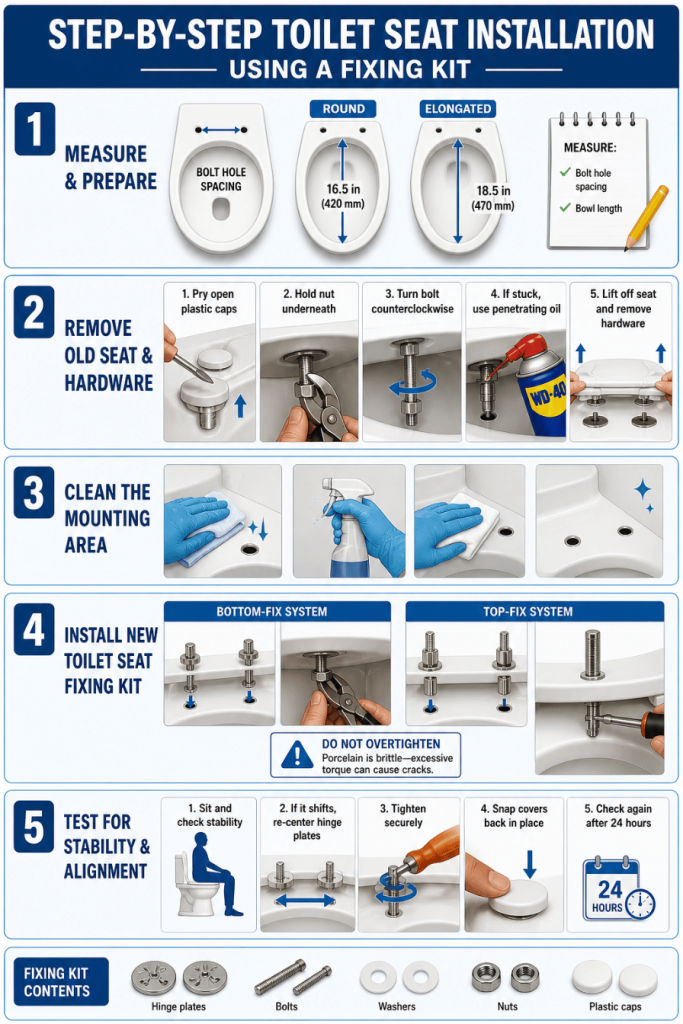
Before removing the old seat or purchasing a new one, measure the bolt hole spacing and the bowl length from the center of the bolt holes to the front edge of the bowl. A standard round bowl measures approximately 16.5 inches (420mm) and an elongated bowl approximately 18.5 inches (470mm). These measurements, combined with the bolt hole spread, ensure your new toilet seat and fixing kit will fit precisely.
Step 2 — Remove the Old Seat and Hardware:
Pry open the plastic caps at the back of the old seat hinges using a flathead screwdriver to expose the bolt heads. Hold the nut underneath the bowl rim steady with pliers or your fingers, and turn the bolt counterclockwise using a screwdriver or socket wrench. If the bolts resist, apply a penetrating oil such as WD-40 to both the bolt head and the nut, allow it to soak for 5–10 minutes, and try again. Once loose, lift the seat and hardware away and dispose of all old fasteners.
Step 3 — Clean the Mounting Area:
With the old seat removed, clean the area around the bolt holes thoroughly. This is the best opportunity to disinfect a zone that is normally inaccessible. Wipe with a disinfectant cleaner, then finish with denatured (rubbing) alcohol to remove any residual grease or soap film. Allow to dry completely before fitting new hardware.
Step 4 — Install the New Toilet Seat Fixing Kit:
Align the new seat’s hinge plates with the bolt holes in the bowl. Insert the new bolts through the hinge plates and into the mounting holes. For a bottom-fix system, thread the nut and washer onto the bolt from underneath the bowl rim — hand-tight first, then snug with pliers or a wrench. For a top-fix system, insert the bolt and tighten the expanding anchor from above until the seat is firm. Do not overtighten. Porcelain is brittle, and excessive torque can crack the bowl around the mounting hole.
Step 5 — Test for Stability and Alignment:
Sit on the seat to check for any lateral movement. If the seat shifts, loosen the bolts slightly, re-center the hinge plates, and re-tighten. Snap the plastic bolt covers back over the hinge caps. Check again after 24 hours, as hardware sometimes settles during initial use.
How to Remove Stuck or Rusted Toilet Seat Bolts:
Corrosion is the primary cause of difficult toilet seat replacement. When steel hardware has been in a damp bathroom environment for years, the nut and bolt can fuse into a single rusted mass that refuses to turn. The Family Handyman’s plumbing repair guides recommend a systematic approach: start with penetrating oil, escalate to cutting tools if needed, and always protect the porcelain surface.
If penetrating oil does not free the bolt after a 10-minute soak, the next step is cutting. A hacksaw blade (used without the frame in confined spaces), a reciprocating saw with a metal-cutting blade, or a rotary tool with a cutting disc can all sever the bolt between the porcelain and the hinge base. Place a wide putty knife or strip of cardboard between the blade and the bowl rim to prevent scratching or chipping the porcelain. As a final option, drilling through the bolt head with progressively larger drill bits (starting with a 1/16-inch pilot bit) will destroy the fastener while leaving the bowl intact.
Once you replace corroded hardware, invest in a quality stainless steel, brass, or nylon toilet seat fixing kit to prevent the same problem recurring.
Frequently Asked Questions:
What are toilet seat bolts, and what do they do?
Toilet seat bolts are the fasteners that secure the hinge assembly of a toilet seat to the toilet bowl. They pass through mounting holes at the back of the bowl — either from above (top-fix) or through to a nut underneath (bottom-fix) — and hold the seat in correct alignment and at the right height above the bowl rim. They are the primary structural connection between the seat and the ceramic, and their condition directly affects seat stability and hygiene.
What size are standard toilet seat bolts?
The most common toilet seat bolt in North America has a thread diameter of approximately 0.3 inches (7.8mm) and a length of around 2.75 inches (70mm). Brass bolts for toilet seat installation are frequently sized at ¼-inch-20 x 2¼ inches or 5/16 UNC threading. The mounting hole spacing (bolt spread) on most toilets is 5.5 inches (155mm) center-to-center, which is the accepted standard in both North America and the UK.
What is the difference between top-fix and bottom-fix toilet seat bolts?
Bottom-fix bolts thread through the bowl and are tightened with a nut beneath the rim — the traditional system used on most older toilets. Top-fix bolts use an expanding anchor mechanism that grips inside the mounting hole from above, with no under-bowl access required. The two systems are not interchangeable, so identifying your toilet type before buying a replacement toilet seat fixing kit is essential.
Which toilet seat bolt material is best — plastic, brass, or stainless steel?
Each material has its advantages. Plastic (nylon) bolts are the most corrosion-proof and easiest to remove in future, making them ideal for longevity of the fixing system. Brass provides a balance of strength and rust resistance and is compatible with most major toilet brands. Stainless steel offers the greatest load-bearing strength and is suitable for heavy-duty or commercial use. Plain steel hardware should be avoided entirely, as it corrodes rapidly in bathroom conditions and can seize within a year or two.
Why does my toilet seat wobble even after tightening the bolts?
A persistently wobbly seat despite tight bolts usually indicates one of three problems: the bolt holes in the bowl have worn or enlarged through repeated use; the hinge plates are not seated flush with the porcelain because the bolt spread of the new seat does not precisely match the bowl’s hole spacing; or rubber/plastic washers between the hinge and the bowl are missing or have compressed beyond their useful life. Replacing the washers, verifying correct bolt spread alignment, or fitting a seat with an adjustable hinge spread often resolves the issue.
How do I remove rusted toilet seat bolts without damaging the bowl?
Apply a penetrating oil such as WD-40 to the bolt head and the nut, allow 5–10 minutes to work into the corrosion, then attempt to turn with pliers and a screwdriver simultaneously. If that fails, use a hacksaw blade (held bare-handed in a glove) to cut through the bolt shaft between the bowl and the hinge. Protect the porcelain with a wide putty knife or cardboard strip during any cutting. As a last resort, carefully drill through the bolt head with a progressively larger bit, starting at 1/16 inch.
Can I replace toilet seat bolts without replacing the entire seat?
Yes, in most cases. As long as the seat hinge is intact and undamaged, replacement toilet seat bolts are sold separately as a toilet seat fixing kit or hinge bolt set. Products such as the Danco Universal Toilet Seat Hinge Bolts or similar universal kits from plumbing suppliers are designed to fit most standard hinges and bowls without requiring full seat replacement. This is typically far more economical than purchasing a new seat.
How tight should toilet seat bolts be?
Toilet seat bolts should be snug but not overtightened. Tighten by hand until the hinge sits flush and immovable against the bowl, then give no more than a quarter-turn additional with a tool. Porcelain is brittle and can crack under excessive torque applied at the bolt hole. If the seat still wobbles at hand-tight, check that rubber washers are present between the hinge plate and the porcelain — these provide grip and prevent the hinge from rotating.
What tools do I need for toilet seat installation and bolt replacement?
For most standard installations, you need only a flathead screwdriver (to open the bolt caps and turn the bolt head), a pair of adjustable pliers or a wrench (to hold the nut underneath), and a cleaning cloth and disinfectant for the area around the bolt holes. For stuck or corroded bolts, you may additionally need penetrating oil, a hacksaw blade for tight spaces, and safety glasses if any drilling is involved.
Are toilet seat bolt holes the same on all toilets?
The bolt hole spacing is standardized at 5.5 inches (155mm) center-to-center on most modern toilets in the US and UK, but this is not universal. Older toilets, European imports, children’s toilets, and specialist bathroom designs can have wider (around 6 inches), narrower (around 5 inches), or entirely non-standard spacing. Always measure your existing bolt hole spread before purchasing a seat or fixing kit. Adjustable-spread hinge bolt kits are available from plumbing suppliers for non-standard spacings.
What is included in a toilet seat fixing kit?
A standard toilet seat fixing kit typically includes two bolts (the seat mounting screws), two nuts (plastic wing nuts for bottom-fix, or expanding rubber anchors for top-fix), two washers (rubber or plastic, to provide grip and prevent slippage between the hinge and the bowl), and plastic decorative caps to conceal the bolt heads. Some kits also include additional rubber bumpers to cushion the seat against the bowl rim. Higher-quality kits made from brass or stainless steel may also include lock nuts or downlock mechanisms to prevent the hardware from loosening with use.
How long do toilet seat bolts last?
Nylon and brass toilet seat bolts can last the full lifespan of the seat itself — typically 5 to 15 years depending on use frequency, cleaning chemicals used, and the quality of the original hardware. Plain steel hardware in damp bathroom conditions may corrode noticeably within 12 to 24 months. Regular inspection during cleaning — checking for discoloration, surface rust, or early loosening — allows you to replace bolts before they become seized and difficult to remove.
Can overtightening toilet seat bolts crack the toilet?
Yes. Porcelain is strong under compressive load in normal use, but concentrated force applied at the small surface area around a bolt hole can cause it to fracture. This type of damage is not covered under most manufacturer warranties and can be expensive to repair. Always hand-tighten first, then apply only minimal additional torque with a tool — just enough to eliminate wobble. If the seat remains loose at a safe tightening level, the issue is likely misalignment or missing washers rather than insufficient bolt torque.
What is a toilet seat repair kit, and when do I need one?
A toilet seat repair kit is a broader package that may include replacement bolts, nuts, washers, hinge bumpers, and sometimes even replacement hinge brackets. You need one when the existing hardware has corroded, broken, or been stripped — but the seat body itself remains in usable condition. Repair kits are available from Danco, Fluidmaster, and most plumbing supply retailers, and typically cost a fraction of a full seat replacement. Checking your local government or municipal plumbing code guidelines can also help confirm whether any specific hardware standards apply in your area.
Do soft-close toilet seats use different bolts?
Most soft-close toilet seats use the same standard bolt and mounting hole format as conventional seats — either top-fix or bottom-fix depending on the toilet type. The soft-close mechanism is built into the hinge damper assembly above the mounting hardware and does not affect the bolt specification. However, some premium soft-close seats include proprietary quick-release hinge systems with manufacturer-specific hardware, so always check compatibility with your toilet’s bolt hole spacing and access type before purchasing.


Leave a Reply